9,929 Starlink satellites active: Orbital Briefing, 1 November

Starlink's latest successful launch follows a busy week in orbit. Today's briefing also covers Artemis III planning, close approaches and the next Electron mission.
| Active satellites | 15,956 |
| Starlink active | 9,929 |
| Catalogued objects | 31,938 |
| Active close approaches | 20 |
| People in space | 10 |
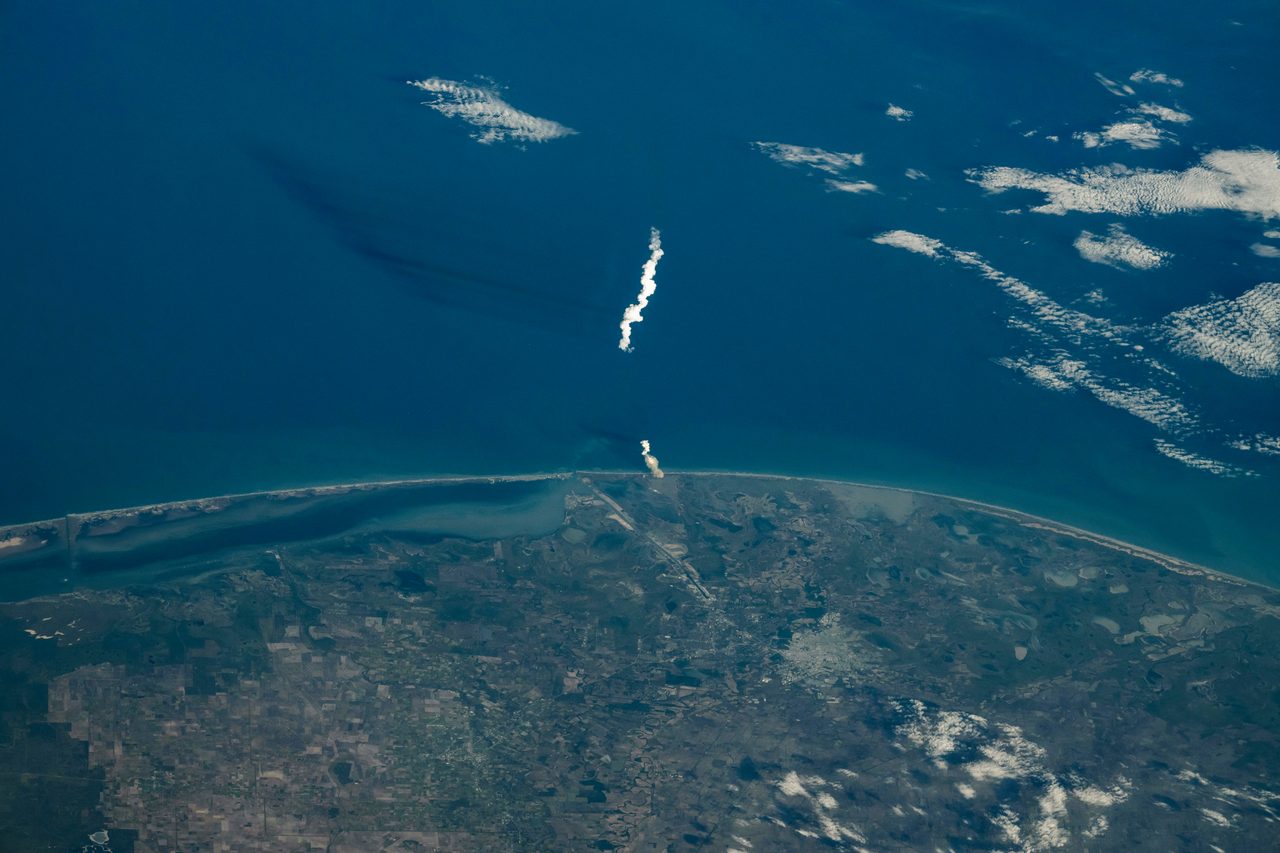
SpaceX successfully launched Starlink Group 15-18 aboard a Falcon 9 Block 5 at 04:04 UTC on 31 October, following the successful Group 15-16 flight on 27 October. The launches keep constellation deployment prominent as attention turns to another Starlink mission scheduled for 6 November.
Starlink had 9,929 operational satellites on 1 November 2026, according to Orbital Radar tracking data. A further 1,035 were raising their orbits and 222 were deorbiting, distinctions that matter when assessing how much of the fleet is available for service rather than travelling towards or away from its working orbit.
Across all operators, 15,956 satellites were active on 1 November 2026, according to Orbital Radar's live catalogue. The Orbital Radar Starlink Tracker provides a way to follow the constellation's distribution, rather than treating every satellite launched as an operational spacecraft.
Artemis checkout plans and lunar science
Artemis III planning is another development to watch: NASASpaceflight reports that Isaacman has outlined a multi-launch checkout sequence and a priority for Blue Origin. The emphasis is on the sequence of preparations and checks, rather than a completed mission milestone; the report should not be read as evidence that those steps have already flown.
The Moon also features in NASA's Astronomy Picture of the Day, titled 'Colors of the Moon' for 1 November 2026. Readers following the lunar coverage can explore the Moon's current position, phase and orbiters through Orbital Radar's Moon Globe.
Close approaches need context
Orbital Radar tracking data listed 20 active close approaches on 1 November 2026. Among the reported encounters, STARCATCHER-1 and OBJECT CE have a minimum separation of approximately 0.76 km, while HAWK-15C and ICEYE-X88 are listed at approximately 1.40 km.
A close approach is a predicted passage near another object, not a collision warning by itself. Separation alone does not establish collision probability: uncertainty in the objects' positions and their relative motion also matter. Orbital Radar's space situational awareness toolkit places tracking information in that wider context.
Space weather is comparatively quiet by the Kp index, a measure of global geomagnetic disturbance, which stands at 1. Solar-wind speed is 513 kilometres per second, however, and the low Earth orbit risk indicator is yellow, so the operational picture is not uniformly green.
What to Watch
Rocket Lab's Electron mission The Sea God Surveys, also designated iQPS Launch 9, is marked Go for Launch for 2 November at 16:41 UTC, targeting low Earth orbit. On 3 November, Kinetica 2 is scheduled for 00:10 UTC with a provisional SpaceSail polar mission designation, followed by Falcon 9 carrying USSF-432 at 01:42 UTC.
Further ahead, Long March 2C and Long March 12 missions are scheduled for 5 November, with Starlink Group 15-21 following on 6 November at 02:21 UTC. These remain scheduled events, not completed launches; timings and status can be followed on Orbital Radar's Launch Schedule.
Frequently Asked Questions
How many Starlink satellites are operational on 1 November 2026?
When is Rocket Lab's next Electron launch?
📎 Cite this article · data available
Orbital Radar Newsroom. (2026). 9,929 Starlink satellites active: Orbital Briefing, 1 November. Orbital Radar. https://orbitalradar.com/blog/orbital-briefing-2026-11-01"9,929 Starlink satellites active: Orbital Briefing, 1 November." Orbital Radar, 1 November 2026, https://orbitalradar.com/blog/orbital-briefing-2026-11-01.@misc{orbitalradar_orbital_briefing_2026_11_01,
title = {9,929 Starlink satellites active: Orbital Briefing, 1 November},
author = {{Orbital Radar}},
year = {2026},
howpublished = {\url{https://orbitalradar.com/blog/orbital-briefing-2026-11-01}}
}