Space policy declaration: Orbital Briefing, 5 November
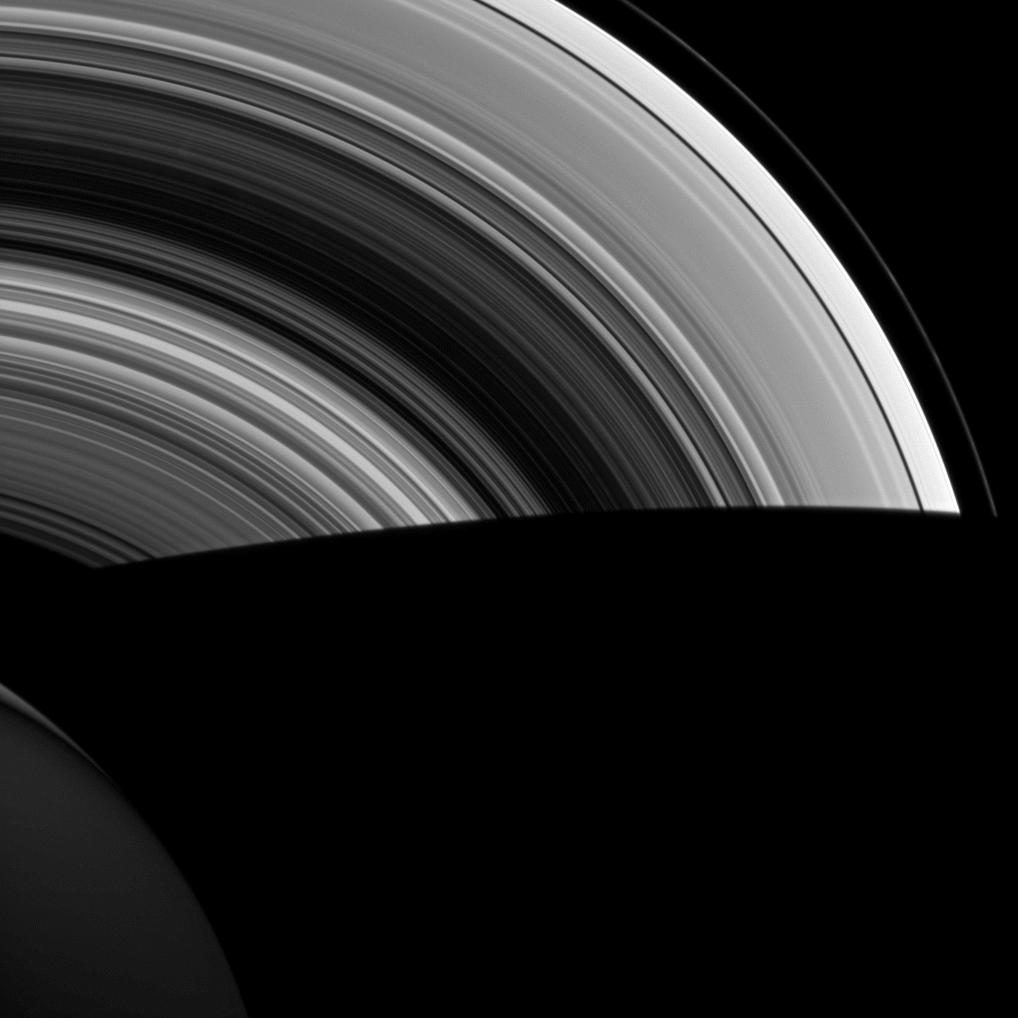
Donald Trump has issued an “American Declaration of Freedom in Space”. Meanwhile, orbital tracking highlights close approaches as Amazon Leo prepares for its next launch.
| Active satellites | 16,659 |
| Starlink active | 9,897 |
| Catalogued objects | 32,018 |
| Active close approaches | 19 |
| People in space | 10 |
Donald Trump has issued an “American Declaration of Freedom in Space”, proclaiming “American space superiority for all eternity”. The declaration puts US ambitions in space at the centre of today's policy news, with military launches also prominent in the coming schedule.
The distinction between political ambition and operational capability matters: a declaration is not itself a launch, a deployed spacecraft or an operational service. SpaceX's forthcoming USSF-432, USSF-627 and USSF-317 missions will offer concrete milestones to follow, although their mission designations alone do not establish what capabilities they will deliver.
Close approaches need context
Orbital Radar tracking data recorded 19 active close approaches as of 5 November 2026. Among the listed encounters are CZ-4B DEB and STARLINK-5460 at approximately 1.86 km, and the PROBA-3 CSC and PROBA-3 OSC spacecraft at approximately 1.98 km.
The closest listed pairing is OBJECT B and OBJECT C, at approximately 0.63 km. These distances are not collision probabilities: assessing danger also requires information about timing, relative motion and uncertainty in each object's predicted position.
Some neighbouring spacecraft operate together, so proximity should not automatically be read as an emergency. Orbital Radar's space situational awareness toolkit provides context for monitoring objects in orbit, while the Debris Map distinguishes payloads, rocket bodies and debris.
Amazon Leo approaches its next launch
Amazon Leo's next scheduled mission is LV-01 aboard a Vulcan Centaur, no earlier than 13 November 2026. The broadband constellation, formerly Project Kuiper, has flown 14 production missions since 28 April 2025, placing 396 satellites into orbit.
Starlink had 9,897 operational satellites as of 5 November 2026, according to Orbital Radar tracking data. That comparison illustrates the deployment gap, rather than a direct measure of coverage or service quality; the Starlink Tracker follows the larger constellation's orbital distribution.
Amazon Leo has not opened consumer service. Amazon says initial service will begin before the end of 2026 in the US, UK, France, Germany and Canada, while its conditional regulatory waiver keeps the first-generation deployment deadline at 30 July 2029.
What to Watch
Long March 2C is scheduled to carry an unidentified payload on 5 November at 16:00 UTC. Ceres-2 follows on 6 November at 23:35 UTC, ahead of Falcon 9's USSF-432 mission on 7 November at 00:46 UTC; launch times remain subject to change.
Long March 12 is scheduled for 8 November at 20:25 UTC, with its SatNet constellation assignment still tentative. Orbital Radar's Launch Schedule brings these missions together with the later Vulcan flight carrying Amazon Leo satellites.
Space weather is currently quiet, with the Kp index (a measure of global geomagnetic disturbance) at 0. The current risk indicators are green for low Earth orbit, geostationary orbit and the International Space Station, but those conditions are not a forecast for every forthcoming launch.
Frequently Asked Questions
When is the next Amazon Leo satellite launch?
Do close satellite approaches mean a collision is likely?
Cite this article
Pick a style, then copy it or download it for your reference manager.Orbital Radar. (2026, November 5). Space policy declaration: Orbital Briefing, 5 November. Retrieved November 5, 2026, from https://orbitalradar.com/blog/orbital-briefing-2026-11-05
“Space policy declaration: Orbital Briefing, 5 November.” Orbital Radar, 5 Nov. 2026, orbitalradar.com/blog/orbital-briefing-2026-11-05. Accessed 5 Nov. 2026.
Orbital Radar (2026) Space policy declaration: Orbital Briefing, 5 November. Available at: https://orbitalradar.com/blog/orbital-briefing-2026-11-05 (Accessed: 5 November 2026).
Orbital Radar. “Space policy declaration: Orbital Briefing, 5 November.” Last modified November 5, 2026. https://orbitalradar.com/blog/orbital-briefing-2026-11-05.
@misc{orbitalradar_blog_orbital_briefing_2026_11_05,
  author       = {{Orbital Radar}},
  title        = {Space policy declaration: Orbital Briefing, 5 November},
  year         = {2026},
  month        = nov,
  howpublished = {\url{https://orbitalradar.com/blog/orbital-briefing-2026-11-05}},
  url          = {https://orbitalradar.com/blog/orbital-briefing-2026-11-05},
  urldate      = {2026-11-05},
  note         = {Accessed 2026-11-05}
}
TY - ELEC AU - Orbital Radar, TI - Space policy declaration: Orbital Briefing, 5 November PY - 2026 DA - 2026/11/05 PB - Orbital Radar UR - https://orbitalradar.com/blog/orbital-briefing-2026-11-05 Y2 - 2026/11/05 LA - en ER -
Live figures change, so keep the date you accessed the page. How to cite Orbital Radar