Eclipse Pair: A Dance of Shadows and Light
A rare eclipse pair from August 2026 showcases a total solar eclipse and a deep partial lunar eclipse, captured in exquisite HDR imagery.
The photograph this article describes is by Gwenaël Blanck and isn’t shown here. View the original photograph
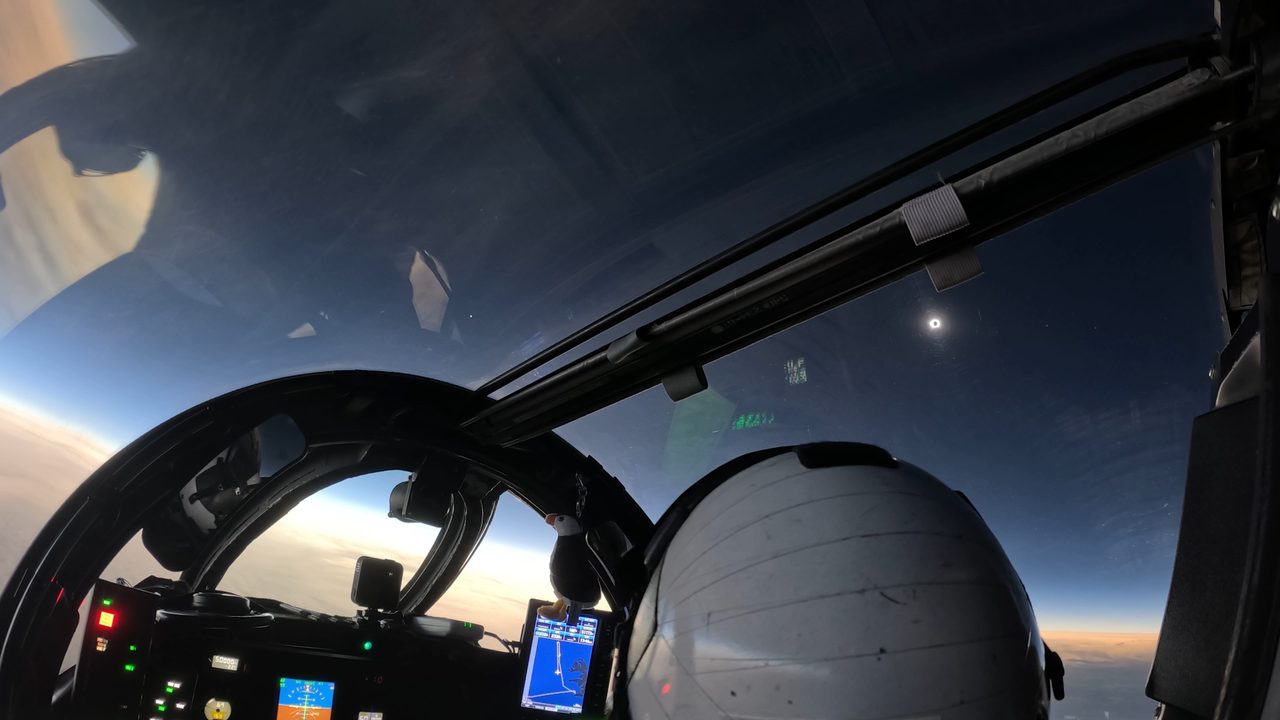
The 'Eclipse Pair' image captures a celestial ballet that unfolded in August 2026, featuring a total solar eclipse followed by a deep partial lunar eclipse. Such pairings occur twice a year during eclipse seasons, when the Sun, Moon, and Earth align closely enough to produce these phenomena. The solar eclipse, observed from Peñafiel, Spain, reveals the fleeting beauty of Bailey's beads and the Sun's corona, while the lunar eclipse, seen from Sèvres, France, shows the Moon partially cloaked in Earth's shadow.
The Science of Eclipse Seasons
Eclipse seasons arise due to the Moon's orbit around Earth being inclined relative to Earth's orbit around the Sun. This inclination means that the three bodies only align during certain periods, leading to eclipses. The August 2026 eclipse pair was particularly noteworthy as it included a total solar eclipse, a rarer event than its lunar counterpart. The next eclipse season in February 2027 will feature an annular solar eclipse and a penumbral lunar eclipse, illustrating the variety within these celestial events.
Witnessing Eclipses and Orbital Mechanics
For those interested in observing future eclipses, the Orbital Radar pass predictor can help plan your viewing experience by forecasting visible passes of satellites and other celestial events. Understanding the orbital mechanics behind eclipses enriches the experience, as one appreciates the precise cosmic dance that brings these events into view.
Frequently Asked Questions
What causes an eclipse pair?
How often do total solar eclipses occur?
📎 Cite this article
Orbital Radar Newsroom. (2026). Eclipse Pair: A Dance of Shadows and Light. Orbital Radar. https://orbitalradar.com/blog/cosmic-gallery-2026-08-29"Eclipse Pair: A Dance of Shadows and Light." Orbital Radar, 30 August 2026, https://orbitalradar.com/blog/cosmic-gallery-2026-08-29.@misc{orbitalradar_cosmic_gallery_2026_08_29,
title = {Eclipse Pair: A Dance of Shadows and Light},
author = {{Orbital Radar}},
year = {2026},
howpublished = {\url{https://orbitalradar.com/blog/cosmic-gallery-2026-08-29}}
}