Unveiling Earth's Shadow: A 22-Year Lunar Eclipse Journey
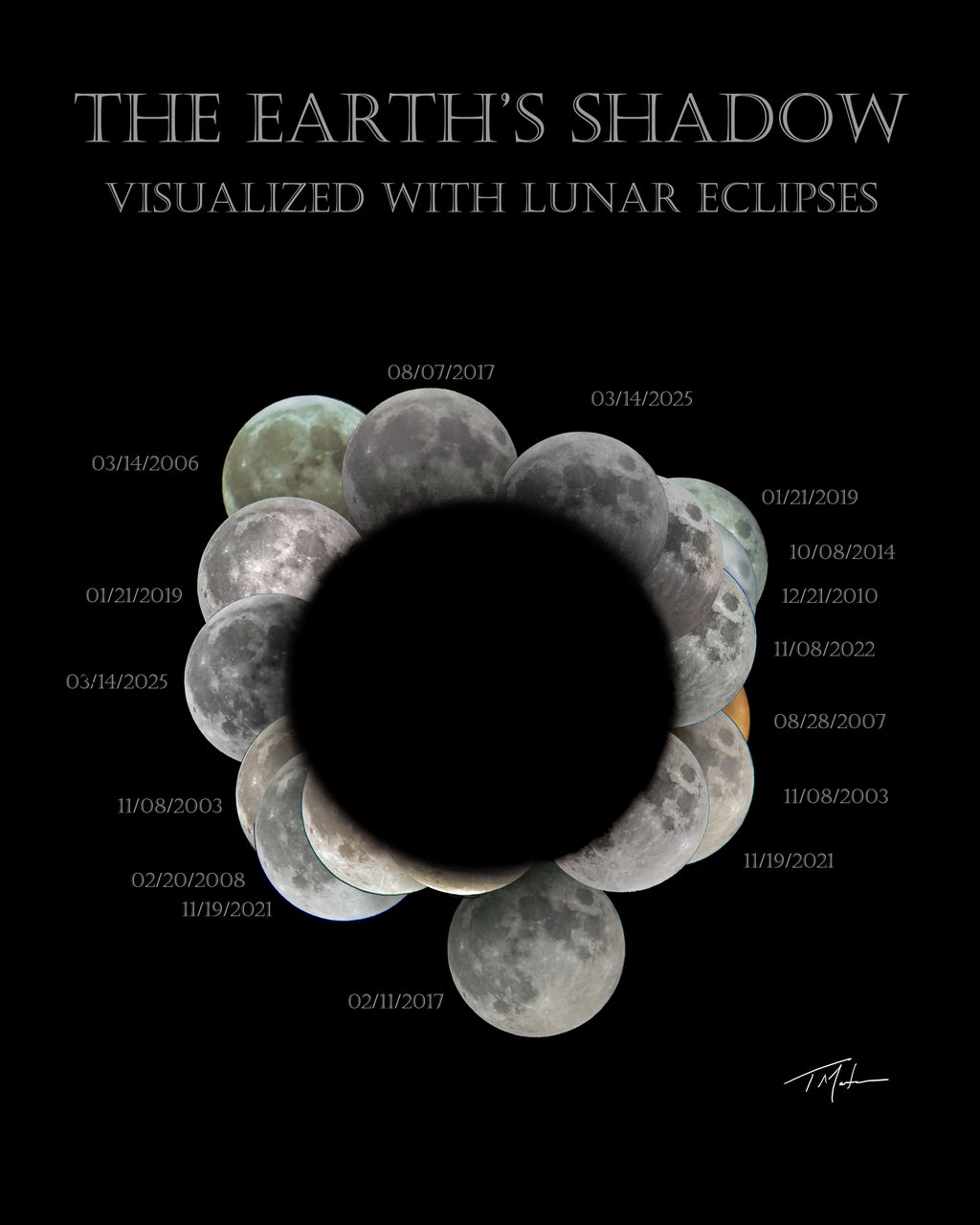
A composite image from 22 years of lunar eclipses reveals Earth's shadow, offering insights into our planet's orbit and atmospheric effects.
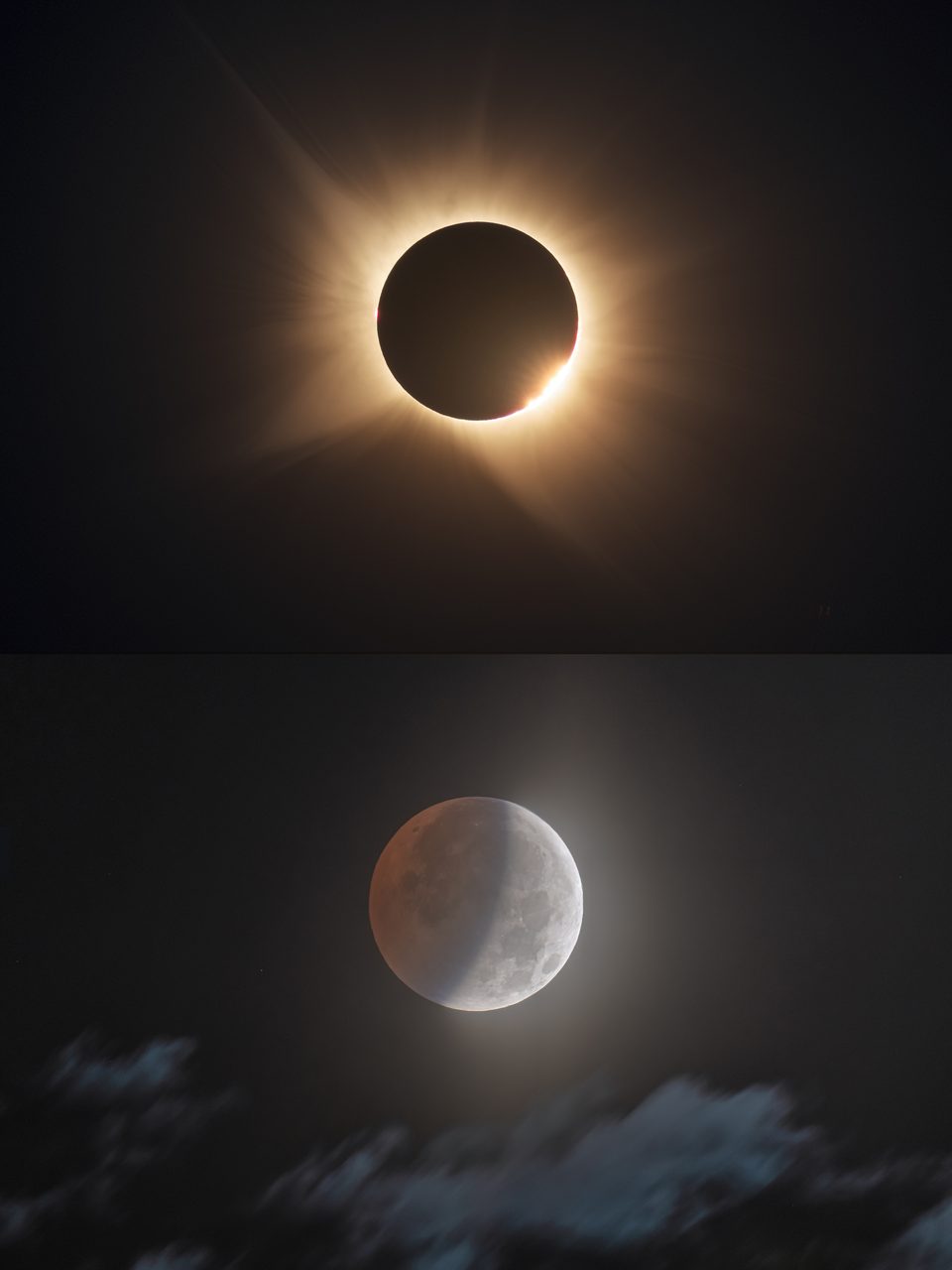
The featured image captures Earth's shadow as seen during lunar eclipses over a span of 22 years. This remarkable compilation by astrophotographer Tim Martin visualises the circular shadow cast by Earth, a phenomenon observed since Aristotle's time. During a lunar eclipse, Earth positions itself between the Sun and the Moon, casting a shadow that obscures the Moon. The slight tilt of the Moon's orbit means these eclipses do not occur monthly, but when they do, they offer a stunning view of our planet's silhouette.
The Science Behind the Shadow
Earth's shadow during a lunar eclipse provides a unique opportunity to study our planet's atmospheric composition. The faint blue band visible in some eclipse images is caused by Earth's atmosphere filtering sunlight, allowing more blue light to pass through than red. This optical effect is similar to why the sky appears blue during the day. Understanding these atmospheric interactions is crucial for climate science and satellite communication.
With the next lunar eclipse visible in parts of North and South America, Europe, and Africa, observers can witness this celestial event firsthand. For those interested in satellite tracking, the Orbital Radar pass predictor can help locate satellites that might pass through Earth's shadow during the eclipse.
Frequently Asked Questions
What causes a lunar eclipse?
Why doesn't a lunar eclipse happen every month?
📎 Cite this article
Orbital Radar Newsroom. (2026). Unveiling Earth's Shadow: A 22-Year Lunar Eclipse Journey. Orbital Radar. https://orbitalradar.com/blog/cosmic-gallery-2026-08-25"Unveiling Earth's Shadow: A 22-Year Lunar Eclipse Journey." Orbital Radar, 26 August 2026, https://orbitalradar.com/blog/cosmic-gallery-2026-08-25.@misc{orbitalradar_cosmic_gallery_2026_08_25,
title = {Unveiling Earth's Shadow: A 22-Year Lunar Eclipse Journey},
author = {{Orbital Radar}},
year = {2026},
howpublished = {\url{https://orbitalradar.com/blog/cosmic-gallery-2026-08-25}}
}