Rare snow blankets the home of astronomy’s next giant eye

Snow and low clouds surround ESO’s Extremely Large Telescope in an unusual view of Cerro Armazones, a mountain chosen for its dry air and exceptionally steady skies.
| Active satellites | 16,683 |
| Catalogued objects | 32,094 |
| Starlink active | 9,831 |
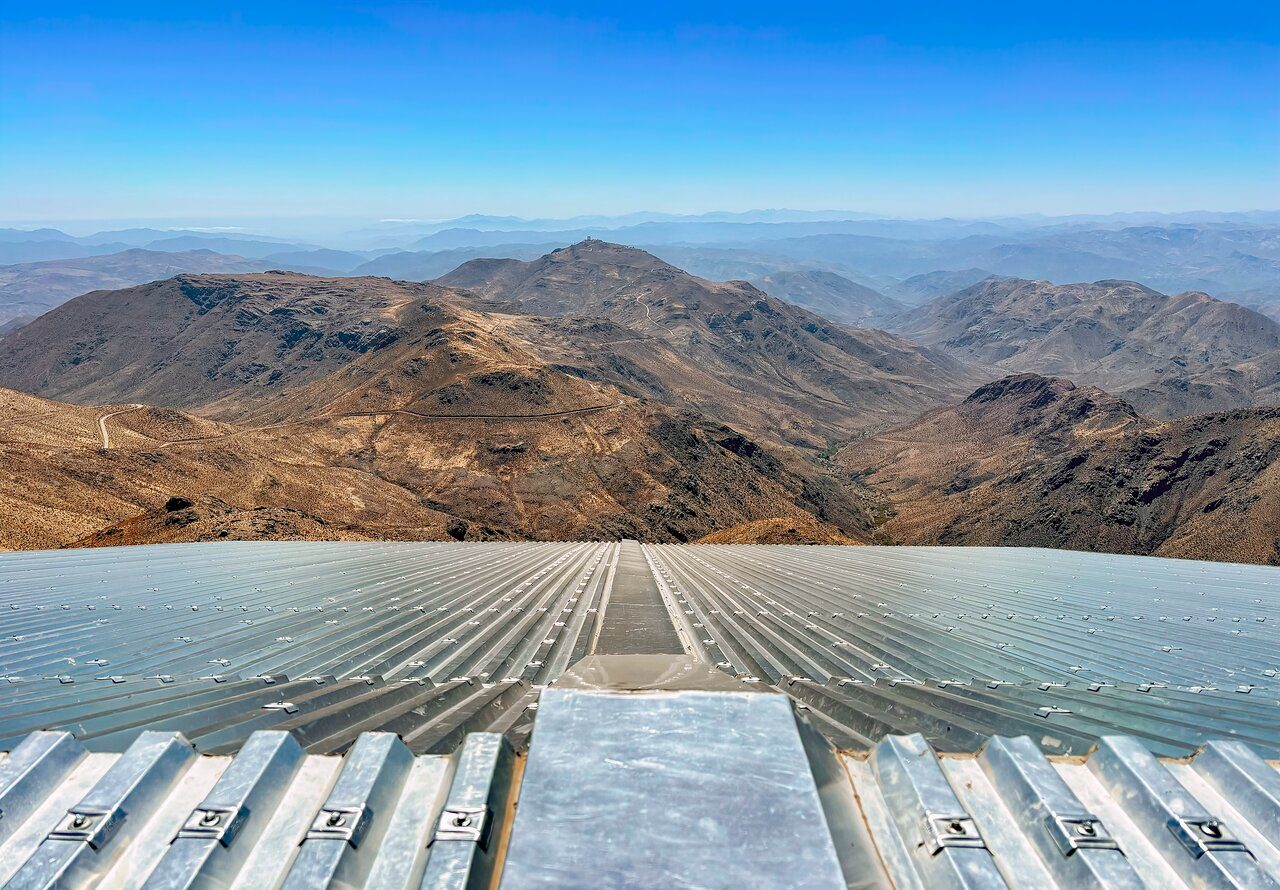
Snow blankets parts of Cerro Armazones in Chile’s Atacama Desert, while low clouds drift around the dome of ESO’s Extremely Large Telescope (ELT). Taken on 19 August 2026, this drone image catches the structure glowing in low sunlight: an unusual scene at a site selected for its exceptionally dry conditions and clear skies.
The mountain’s appeal is not simply an absence of cloud. Its steady atmosphere helps astronomers distinguish fine celestial detail: turbulent air distorts incoming light, blurring the view through a telescope. Snow and thick clouds briefly transformed the usually bare landscape before the familiar dry, cloudless weather returned.
Even in normal weather, this desert is a harsh place for precision machinery. The enormous dome is a protective enclosure, designed to shield the telescope’s delicate components, including its huge mirrors and scientific instruments, which were still awaiting installation in the publisher’s account.
Clear skies in an increasingly occupied sky
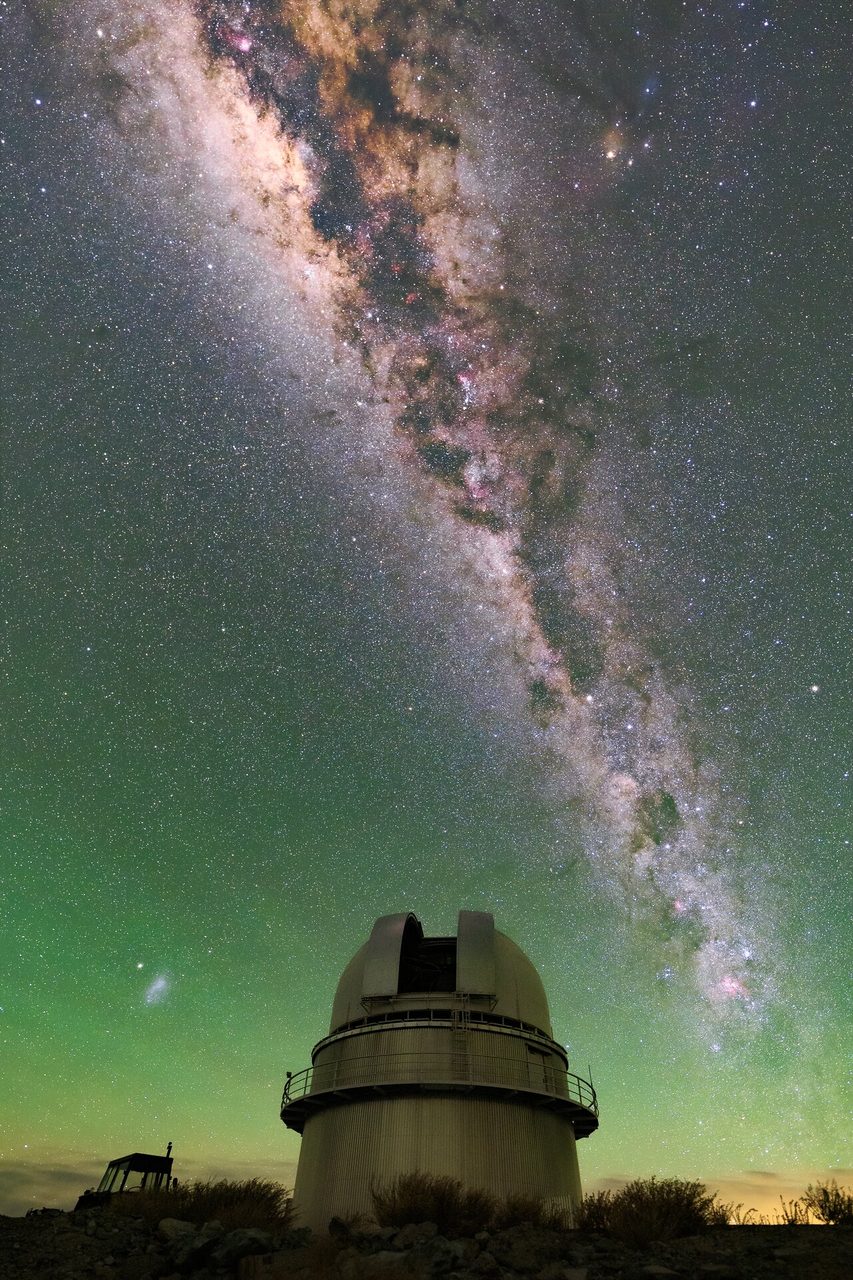
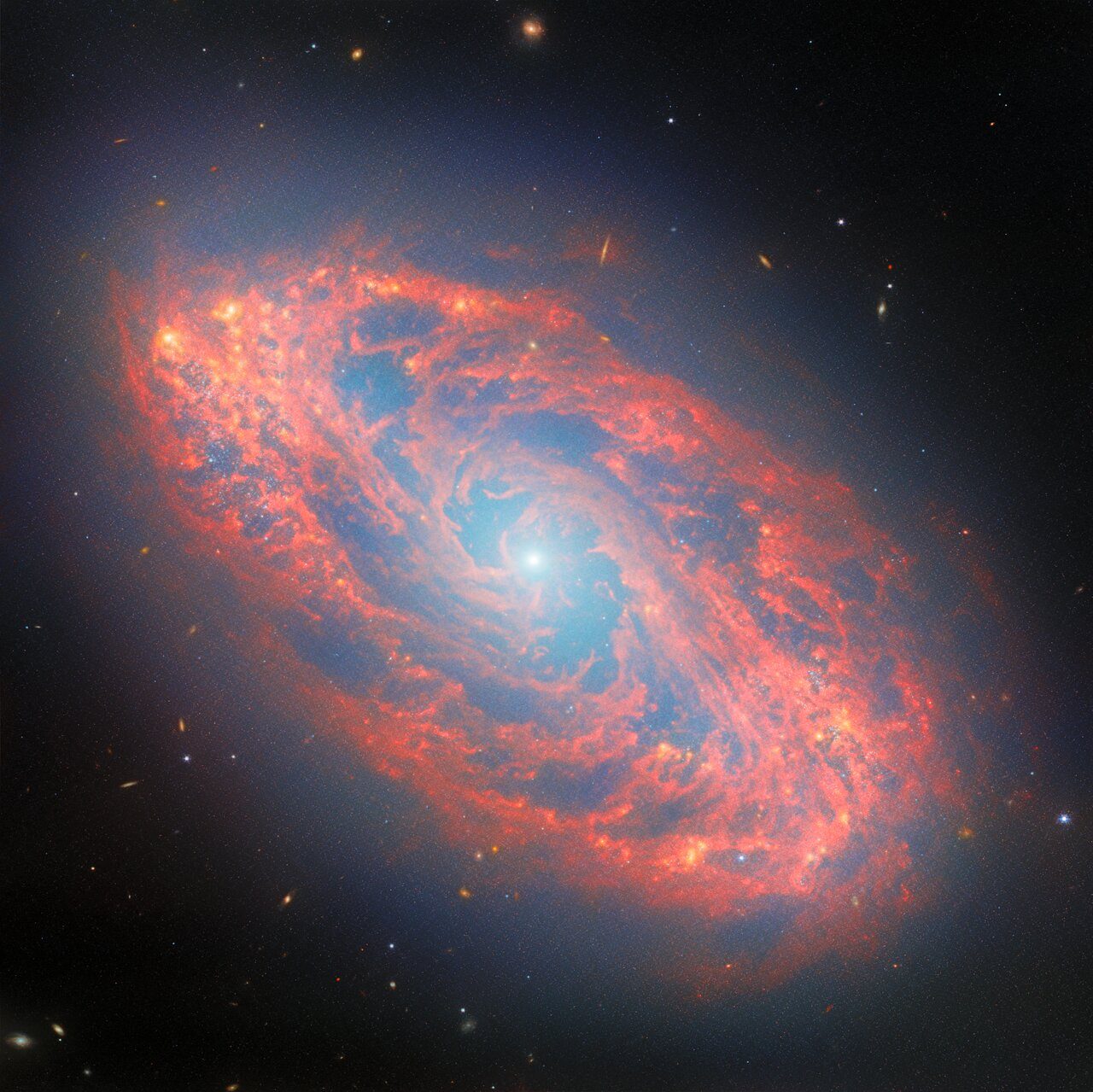
Once construction is complete, the ELT is expected to achieve first light (its first observations of the sky) later this decade. Its science programme will range from exoplanets (planets orbiting other stars) to the earliest galaxies, using Cerro Armazones’s exceptional observing conditions to examine distant objects in finer detail.
Orbital Radar tracking data lists 16,683 active satellites in orbit as of 13 November 2026. Orbital Radar tracking data lists 9,831 operational Starlink satellites as of 13 November 2026.
Those spacecraft are another consideration for ground-based astronomy: satellites reflecting sunlight can cross a telescope’s field of view and leave trails in images. That is a separate challenge from the weather pictured here, but both illustrate why an observing site’s surroundings matter. Readers can explore the constellation’s orbital distribution with Orbital Radar’s Starlink Tracker, alongside this glimpse of a telescope built to look far beyond Earth orbit.
Frequently Asked Questions
Why is snow at the Extremely Large Telescope site unusual?
What will ESO’s Extremely Large Telescope study?
Cite this article
Pick a style, then copy it or download it for your reference manager.Orbital Radar. (2026, November 13). Rare snow blankets the home of astronomy’s next giant eye. Retrieved November 13, 2026, from https://orbitalradar.com/blog/cosmic-gallery-2026-11-13
“Rare snow blankets the home of astronomy’s next giant eye.” Orbital Radar, 13 Nov. 2026, orbitalradar.com/blog/cosmic-gallery-2026-11-13. Accessed 13 Nov. 2026.
Orbital Radar (2026) Rare snow blankets the home of astronomy’s next giant eye. Available at: https://orbitalradar.com/blog/cosmic-gallery-2026-11-13 (Accessed: 13 November 2026).
Orbital Radar. “Rare snow blankets the home of astronomy’s next giant eye.” Last modified November 13, 2026. https://orbitalradar.com/blog/cosmic-gallery-2026-11-13.
@misc{orbitalradar_blog_cosmic_gallery_2026_11_13,
  author       = {{Orbital Radar}},
  title        = {Rare snow blankets the home of astronomy’s next giant eye},
  year         = {2026},
  month        = nov,
  howpublished = {\url{https://orbitalradar.com/blog/cosmic-gallery-2026-11-13}},
  url          = {https://orbitalradar.com/blog/cosmic-gallery-2026-11-13},
  urldate      = {2026-11-13},
  note         = {Accessed 2026-11-13}
}
TY - ELEC AU - Orbital Radar, TI - Rare snow blankets the home of astronomy’s next giant eye PY - 2026 DA - 2026/11/13 PB - Orbital Radar UR - https://orbitalradar.com/blog/cosmic-gallery-2026-11-13 Y2 - 2026/11/13 LA - en ER -
Live figures change, so keep the date you accessed the page. How to cite Orbital Radar