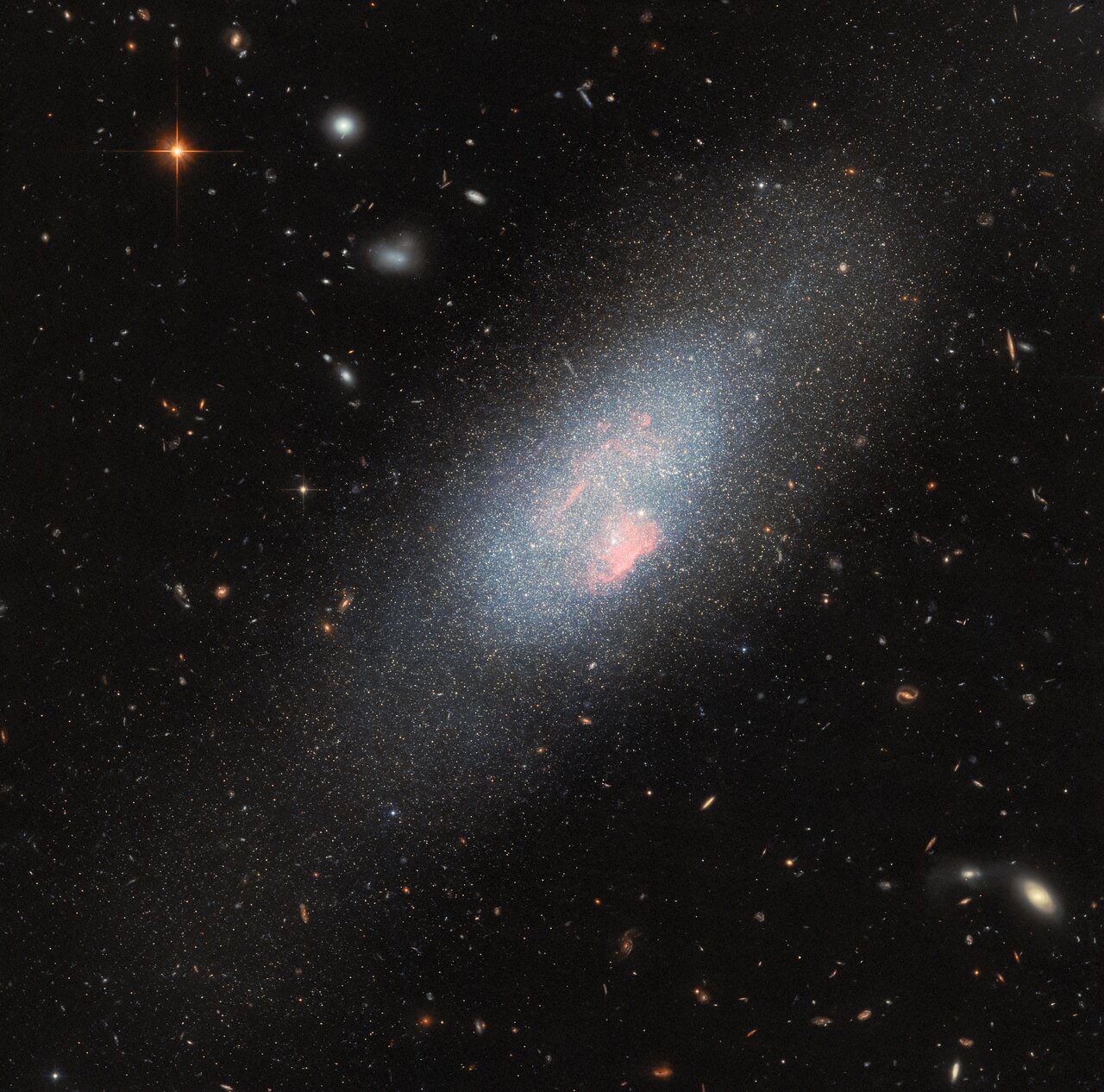
Baby stars blow glowing bubbles in N159’s stellar nursery
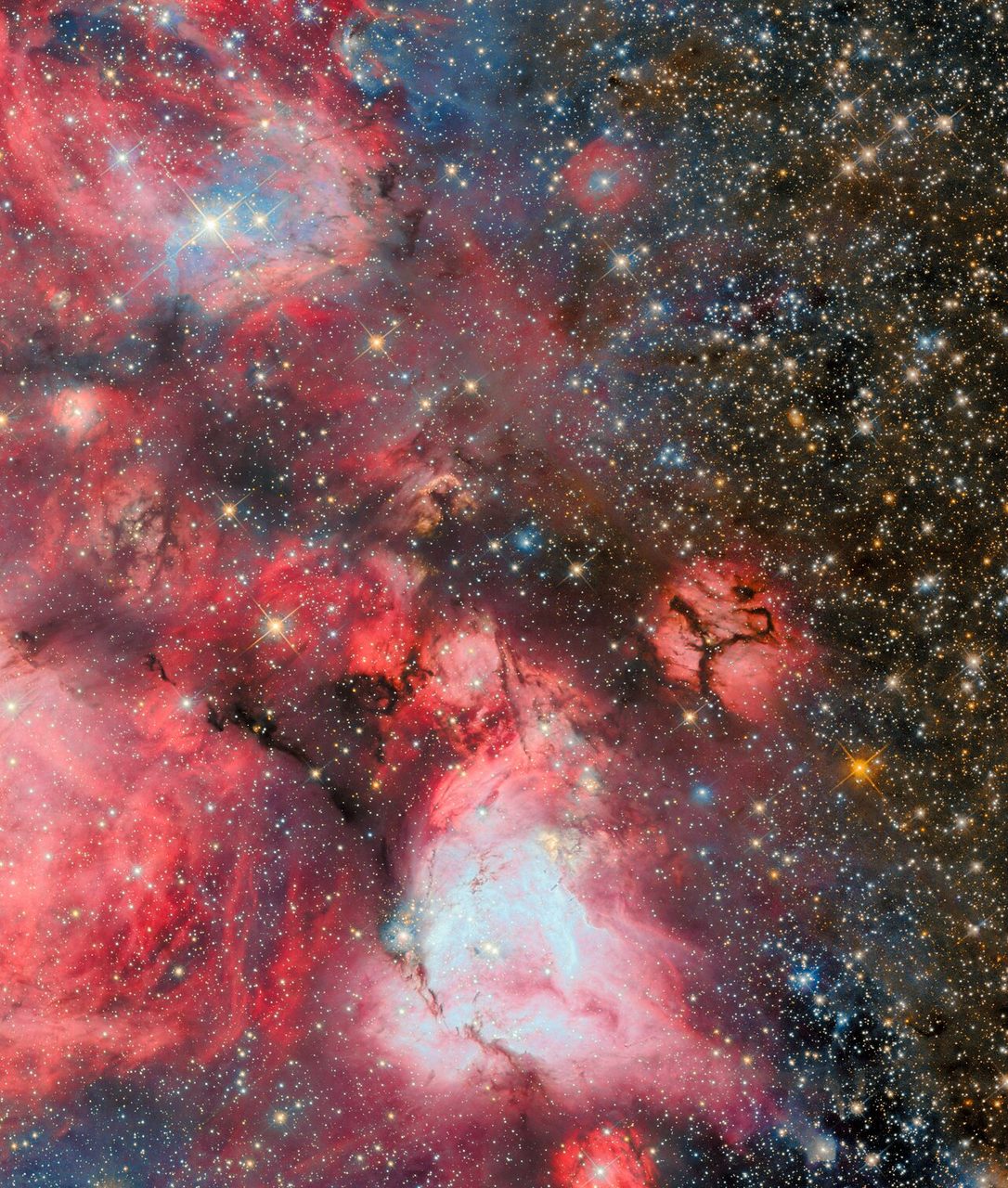
Young stars are reshaping N159 from within. Hubble’s view reveals glowing hydrogen clouds and bubbles carved by radiation and powerful stellar winds.
| Active satellites | 16,659 |
| Catalogued objects | 32,068 |
| Starlink active | 9,898 |
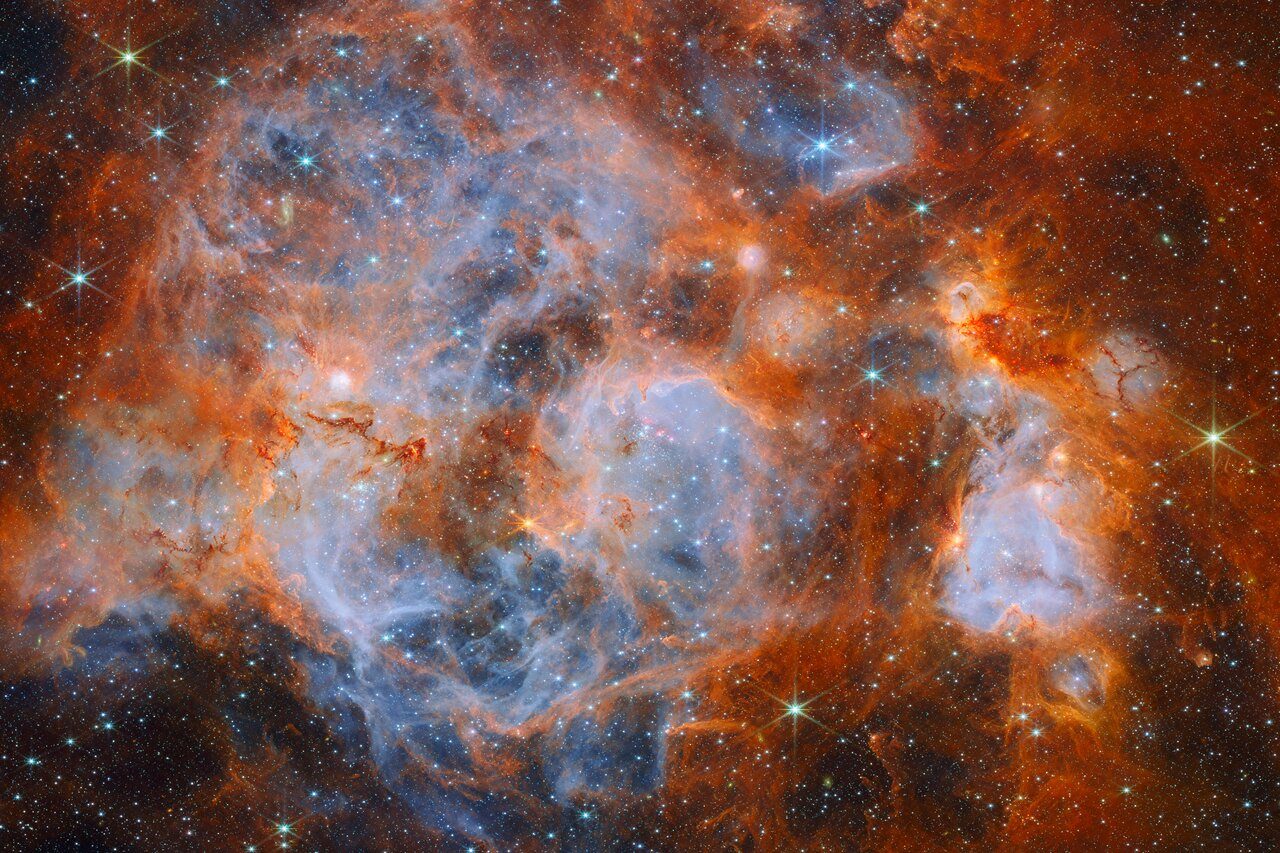
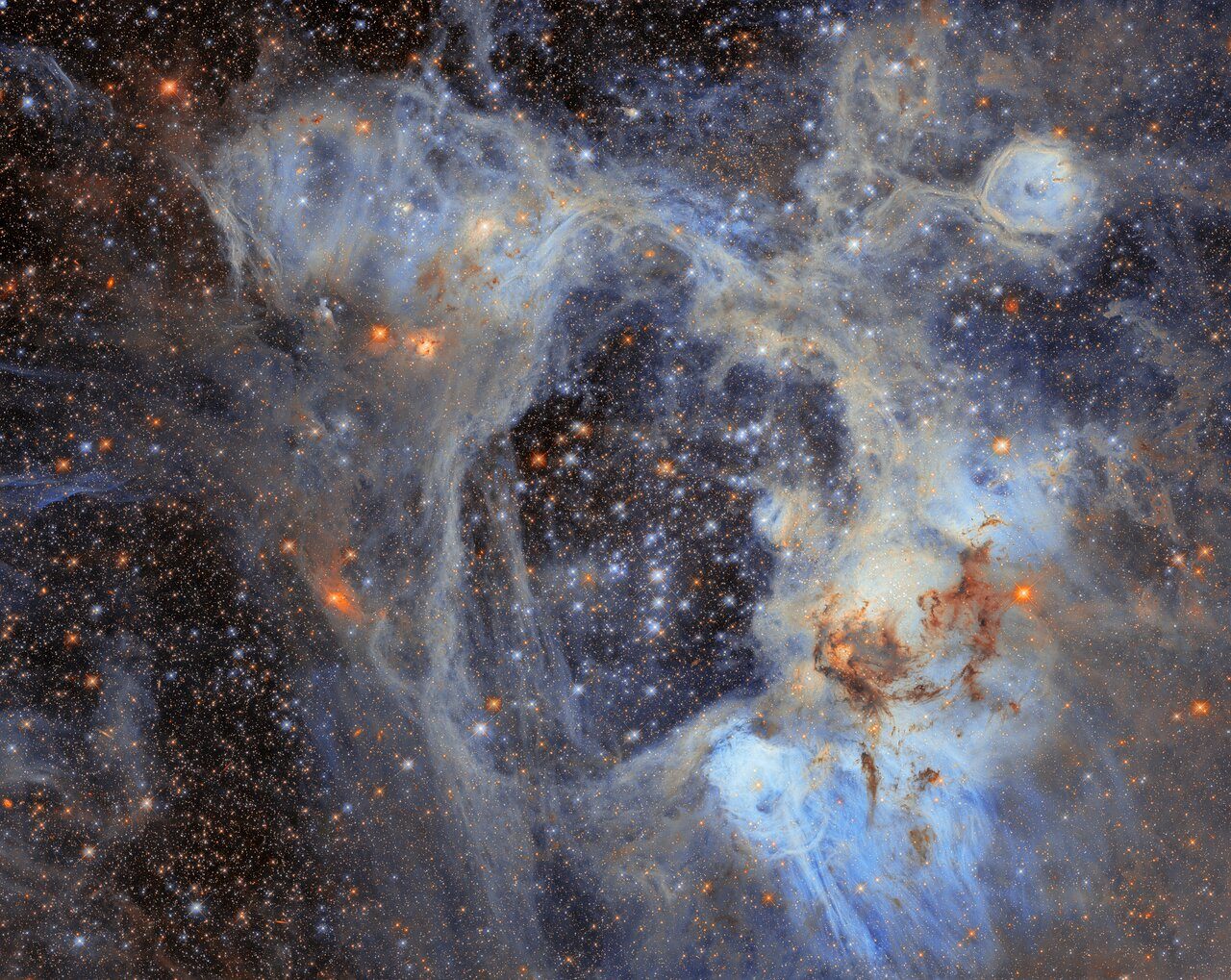
Newborn stars are hollowing out their birthplace in N159, a vast star-forming cloud in the Large Magellanic Cloud. This Hubble image shows part of the complex: billowing red clouds blanket the centre and left, while the clearer right side glitters with stars.
The red glow comes from excited hydrogen atoms illuminated by hot, high-mass stars. Some stars appear wrapped in reddish gas; others sit within bubbles through which the dark background is visible. Dark patches interrupt the luminous clouds, and a pale-blue cloud lies below the centre.
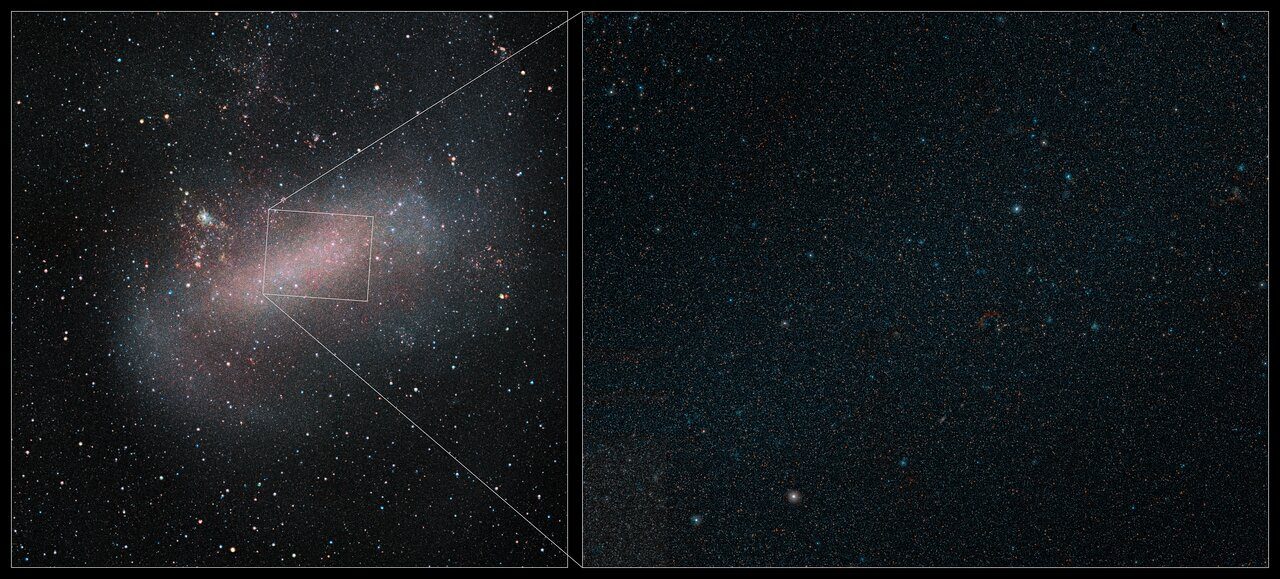
The full N159 complex stretches over 150 light-years, far beyond the portion shown here. Within its cold gas, gravity draws material together until young stars begin to shine. Their emergence changes the surrounding cloud rather than simply lighting it up.
How young stars reshape their surroundings
The bubbles reveal stellar feedback (the effects of stars’ radiation and outflowing material on their surroundings). High-energy radiation and stellar winds (streams of particles flowing away from stars) reshape the gas around these newborn stars. This version of the image incorporates an additional wavelength of light to highlight hot gas; a previous Hubble view of the full complex was released in 2016.
Hubble’s observations also illustrate why placing instruments above Earth’s atmosphere matters to astronomy. The orbital environment supporting space science is increasingly busy: Orbital Radar tracking data records 16,659 active satellites as of 8 November 2026. Orbital Radar tracking data also records 10 people in space on 8 November 2026.
For readers exploring that nearer orbital environment, Orbital Radar’s Satellite Library provides a companion to this much more distant scene. The distinction is worth keeping in mind: N159 shows stars transforming their birthplace, while satellites are instruments through which we study the wider Universe.
Frequently Asked Questions
What causes the red glow in Hubble’s N159 image?
Why are there bubbles around the stars in N159?
Cite this article
Pick a style, then copy it or download it for your reference manager.Orbital Radar. (2026, November 8). Baby stars blow glowing bubbles in N159’s stellar nursery. Retrieved November 8, 2026, from https://orbitalradar.com/blog/cosmic-gallery-2026-11-08
“Baby stars blow glowing bubbles in N159’s stellar nursery.” Orbital Radar, 8 Nov. 2026, orbitalradar.com/blog/cosmic-gallery-2026-11-08. Accessed 8 Nov. 2026.
Orbital Radar (2026) Baby stars blow glowing bubbles in N159’s stellar nursery. Available at: https://orbitalradar.com/blog/cosmic-gallery-2026-11-08 (Accessed: 8 November 2026).
Orbital Radar. “Baby stars blow glowing bubbles in N159’s stellar nursery.” Last modified November 8, 2026. https://orbitalradar.com/blog/cosmic-gallery-2026-11-08.
@misc{orbitalradar_blog_cosmic_gallery_2026_11_08,
  author       = {{Orbital Radar}},
  title        = {Baby stars blow glowing bubbles in N159’s stellar nursery},
  year         = {2026},
  month        = nov,
  howpublished = {\url{https://orbitalradar.com/blog/cosmic-gallery-2026-11-08}},
  url          = {https://orbitalradar.com/blog/cosmic-gallery-2026-11-08},
  urldate      = {2026-11-08},
  note         = {Accessed 2026-11-08}
}
TY - ELEC AU - Orbital Radar, TI - Baby stars blow glowing bubbles in N159’s stellar nursery PY - 2026 DA - 2026/11/08 PB - Orbital Radar UR - https://orbitalradar.com/blog/cosmic-gallery-2026-11-08 Y2 - 2026/11/08 LA - en ER -
Live figures change, so keep the date you accessed the page. How to cite Orbital Radar