Amazon Leo targets Vulcan debut: Orbital Briefing, 9 November
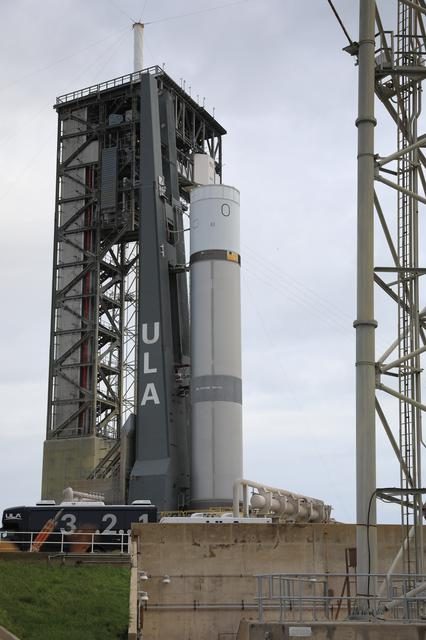
Amazon Leo is preparing for its first Vulcan launch as its broadband deployment faces regulatory deadlines. Elsewhere, close approaches keep orbital safety in focus.
| Active satellites | 16,683 |
| Starlink active | 9,897 |
| Catalogued objects | 32,088 |
| Active close approaches | 25 |
| People in space | 10 |
Amazon Leo is scheduled to make its first flight aboard United Launch Alliance's Vulcan Centaur on 13 November, adding another rocket to its broadband deployment programme. The LV-01 mission comes as Amazon works towards an initial service launch before the end of 2026, following a missed regulatory deployment milestone.
Amazon Leo had placed 396 satellites into orbit as of 9 November 2026, according to Orbital Radar tracking data. Those spacecraft flew on Atlas V, Falcon 9 and Ariane 64 production missions; Vulcan would broaden that launch roster. The forthcoming flight can be followed through Orbital Radar's launch schedule.
Amazon's deployment deadline remains
Amazon Leo, formerly Project Kuiper, has not yet opened consumer service. Amazon says initial availability will begin before the end of 2026 in the US, UK, France, Germany and Canada; selected businesses have been testing an enterprise preview since November 2025.
The Federal Communications Commission granted a conditional waiver on 5 June 2026 after Amazon sought relief from its interim deployment requirement. The company missed the 30 July 2026 milestone of 1,616 working satellites, but its licence remains in force, with all 3,232 first-generation spacecraft still due by 30 July 2029. Satellites launched after the missed milestone have lower spectrum priority until specified waiver conditions are met.
Close approaches need context

Orbital Radar was tracking 25 active close approaches on 9 November 2026, according to Orbital Radar tracking data. Recent encounters include ION SCV-026 and OBJECT BA at approximately 1.43 km, and SATELIOT_8 and SPRITE at approximately the same separation.
Separation alone does not establish collision probability: uncertainty in each object's predicted position and the geometry of the encounter also matter. These events should not be read as confirmed collisions or evidence that avoidance manoeuvres occurred.
Orbital Radar's live catalogue listed 32,088 tracked objects on 9 November 2026. The Debris Map offers a broader view of the environment shared by operational spacecraft, discarded rocket bodies and debris.
What to Watch
SpaceX's Falcon 9 mission USSF-627 is scheduled for 10 November at 03:03 UTC, targeting low Earth orbit (the region relatively close to Earth). The Mir demonstration flight follows on 11 November at 05:00 UTC, with a Long March 2D carrying an unidentified payload scheduled for 11:40 UTC that day.
Friday's schedule includes USSF-317 at 04:23 UTC and Amazon Leo's LV-01 at 17:54 UTC. Starship Flight 15, carrying Starlink Group 31-2, is provisionally listed for 13 November at 22:45 UTC, but remains to be confirmed. Rocket Lab's Electron mission The Mountain God Rises is scheduled for 14 November at 05:30 UTC; launch times remain subject to change.
Frequently Asked Questions
When is Amazon Leo's first Vulcan launch scheduled?
Do satellite close approaches mean a collision is likely?
Cite this article
Pick a style, then copy it or download it for your reference manager.Orbital Radar. (2026, November 9). Amazon Leo targets Vulcan debut: Orbital Briefing, 9 November. Retrieved November 9, 2026, from https://orbitalradar.com/blog/orbital-briefing-2026-11-09
“Amazon Leo targets Vulcan debut: Orbital Briefing, 9 November.” Orbital Radar, 9 Nov. 2026, orbitalradar.com/blog/orbital-briefing-2026-11-09. Accessed 9 Nov. 2026.
Orbital Radar (2026) Amazon Leo targets Vulcan debut: Orbital Briefing, 9 November. Available at: https://orbitalradar.com/blog/orbital-briefing-2026-11-09 (Accessed: 9 November 2026).
Orbital Radar. “Amazon Leo targets Vulcan debut: Orbital Briefing, 9 November.” Last modified November 9, 2026. https://orbitalradar.com/blog/orbital-briefing-2026-11-09.
@misc{orbitalradar_blog_orbital_briefing_2026_11_09,
  author       = {{Orbital Radar}},
  title        = {Amazon Leo targets Vulcan debut: Orbital Briefing, 9 November},
  year         = {2026},
  month        = nov,
  howpublished = {\url{https://orbitalradar.com/blog/orbital-briefing-2026-11-09}},
  url          = {https://orbitalradar.com/blog/orbital-briefing-2026-11-09},
  urldate      = {2026-11-09},
  note         = {Accessed 2026-11-09}
}
TY - ELEC AU - Orbital Radar, TI - Amazon Leo targets Vulcan debut: Orbital Briefing, 9 November PY - 2026 DA - 2026/11/09 PB - Orbital Radar UR - https://orbitalradar.com/blog/orbital-briefing-2026-11-09 Y2 - 2026/11/09 LA - en ER -
Live figures change, so keep the date you accessed the page. How to cite Orbital Radar