$1.3 billion engine deal: Orbital Briefing, 7 November
AST SpaceMobile's $1.3 billion engine agreement puts Blacklift in focus. In orbit, close approaches require context, while the next Chinese and Amazon Leo launches approach.
| Active satellites | 16,661 |
| Starlink active | 9,898 |
| Catalogued objects | 32,064 |
| Active close approaches | 15 |
| People in space | 10 |
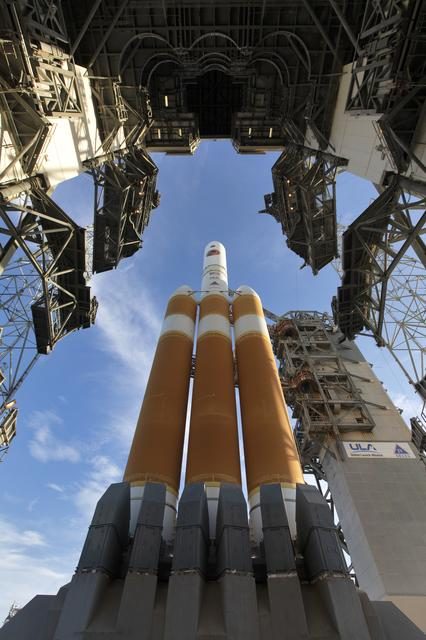
AST SpaceMobile has announced a $1.3 billion engine agreement with Firefly Aerospace to power Blacklift, its proposed heavy-lift rocket. The company is targeting a launch debut in 2028, adding a new vehicle programme to a launch market serving expanding satellite constellations.
The distinction between an engine agreement and an operational rocket matters: the announced debut remains a target, not a demonstrated capability. Blacklift's progress will depend on turning propulsion procurement into an integrated launch vehicle and flight programme; Orbital Radar's launch vehicle directory provides context on the rockets already competing for satellite missions.
Close approaches need context
Orbital Radar tracking data records 15 active close approaches on 7 November 2026. Among the listed encounters, TIANHUI 5C and TIANHUI 5D have an approximate minimum separation of 0.26 km, while TERRA SAR X and TANDEM X are listed at about 0.60 km.
Separation alone does not establish collision probability: relative speed, uncertainty in orbital positions and whether spacecraft are deliberately flying together also matter. The NOAA 16 DEB–CZ-6A DEB encounter, involving objects labelled as debris, has a listed minimum separation of about 1.95 km; the Orbital Radar Debris Map helps place such encounters within the wider orbital environment.
Orbital Radar's live catalogue lists 16,661 active satellites on 7 November 2026. That population makes reliable tracking and coordination important, but a close-approach alert should not be read as a prediction of impact.
Swift's farewell and quiet geomagnetic conditions
NASA's Neil Gehrels Swift Observatory re-entered Earth's atmosphere on November 4, ending nearly 22 years of service. Its departure closes a long-running astronomy mission; readers following atmospheric returns can use Orbital Radar's Re-entry Tracker to explore the subject.
Orbital Radar tracking data records a Kp index of 0 on 7 November 2026. Kp measures global geomagnetic disturbance, and this reading indicates quiet conditions; the current risk indicators for low Earth orbit, geostationary orbit and the International Space Station are also green. These are current conditions rather than a guarantee that space weather will remain quiet.
What to Watch
Long March 12 is scheduled for 8 November 2026 at 20:25 UTC, with the SatNet low Earth orbit group designation still tentative. Falcon 9 mission USSF-627 follows on the schedule for 10 November at 03:03 UTC. Launch times and status updates can be followed on the Orbital Radar Launch Schedule.
Amazon Leo's next scheduled mission is LV-01 aboard United Launch Alliance's Vulcan VC6L, no earlier than 13 November 2026, with 17:54 UTC currently listed. The constellation has put 396 satellites into orbit across 14 production missions and has not yet opened consumer service; Amazon says initial service will begin before the end of 2026.
Frequently Asked Questions
What is AST SpaceMobile's Blacklift rocket?
When is the next Amazon Leo satellite launch?
Cite this article
Pick a style, then copy it or download it for your reference manager.Orbital Radar. (2026, November 7). $1.3 billion engine deal: Orbital Briefing, 7 November. Retrieved November 7, 2026, from https://orbitalradar.com/blog/orbital-briefing-2026-11-07
“$1.3 billion engine deal: Orbital Briefing, 7 November.” Orbital Radar, 7 Nov. 2026, orbitalradar.com/blog/orbital-briefing-2026-11-07. Accessed 7 Nov. 2026.
Orbital Radar (2026) $1.3 billion engine deal: Orbital Briefing, 7 November. Available at: https://orbitalradar.com/blog/orbital-briefing-2026-11-07 (Accessed: 7 November 2026).
Orbital Radar. “$1.3 billion engine deal: Orbital Briefing, 7 November.” Last modified November 7, 2026. https://orbitalradar.com/blog/orbital-briefing-2026-11-07.
@misc{orbitalradar_blog_orbital_briefing_2026_11_07,
  author       = {{Orbital Radar}},
  title        = {\$1.3 billion engine deal: Orbital Briefing, 7 November},
  year         = {2026},
  month        = nov,
  howpublished = {\url{https://orbitalradar.com/blog/orbital-briefing-2026-11-07}},
  url          = {https://orbitalradar.com/blog/orbital-briefing-2026-11-07},
  urldate      = {2026-11-07},
  note         = {Accessed 2026-11-07}
}
TY - ELEC AU - Orbital Radar, TI - $1.3 billion engine deal: Orbital Briefing, 7 November PY - 2026 DA - 2026/11/07 PB - Orbital Radar UR - https://orbitalradar.com/blog/orbital-briefing-2026-11-07 Y2 - 2026/11/07 LA - en ER -
Live figures change, so keep the date you accessed the page. How to cite Orbital Radar