Long March targets orbit: Orbital Briefing, 8 November

China targets a Long March launch today as NASA announces lunar project awards. In orbit, close approaches need context, while Amazon Leo prepares for a Vulcan flight.
| Active satellites | 16,659 |
| Starlink active | 9,898 |
| Catalogued objects | 32,068 |
| Active close approaches | 12 |
| People in space | 10 |
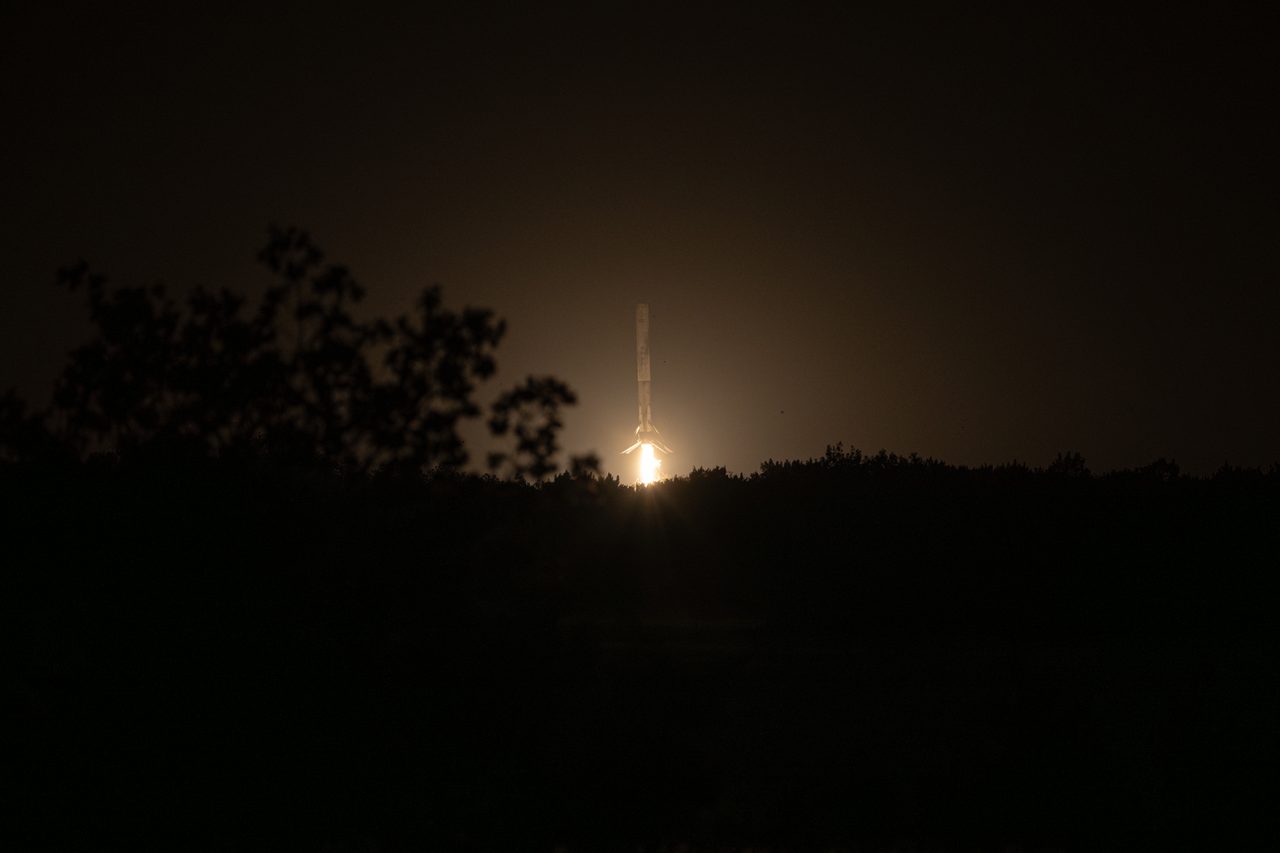
China's Long March 12 is scheduled to launch a SatNet mission towards low Earth orbit on Sunday, 8 November 2026, at 20:25 UTC. The flight is listed as go for launch, although its SatNet LEO group designation remains provisional; the scheduled time is a target, not confirmation of liftoff.
The mission puts China's satellite deployment programme at the centre of today's launch calendar, ahead of a week featuring US defence payloads and commercial broadband spacecraft. Orbital Radar's Launch Schedule lists the forthcoming flights, while the China in Space hub brings together the country's launches and satellite fleet.
NASA backs lunar projects and seeks astronauts
NASA has announced awards for Moon Base transportation, technology and science projects, alongside a search for its next astronaut intake. The developments address complementary parts of lunar exploration: equipment and services for operations on the surface, and the people who may eventually use them.
Project awards are a step towards developing capabilities, rather than evidence that a lunar base is ready to operate. For readers following the institutional side of the programme, Orbital Radar's Space Agencies directory provides context on NASA and its international counterparts.
Close approaches require context
Orbital Radar tracking data lists 12 active close approaches being tracked as of 8 November 2026. Among the listed encounters, OTTER 24C and ERMINAZ-2V have a minimum separation of approximately 0.33 km; GEESAT 3-08 and KUIPER-00425 are listed at approximately 1.93 km.
A close approach is not, by itself, a prediction of collision: interpreting the separation requires information about orbital uncertainty and whether the spacecraft are deliberately operating together. The list also includes PROBA-3 CSC and PROBA-3 OSC, and TERRA SAR X and TANDEM X, illustrating why paired spacecraft need particular context.
Orbital Radar tracking data records 16,659 active satellites as of 8 November 2026. The space situational awareness toolkit helps readers explore the monitoring of objects and their movements around Earth.
What to Watch
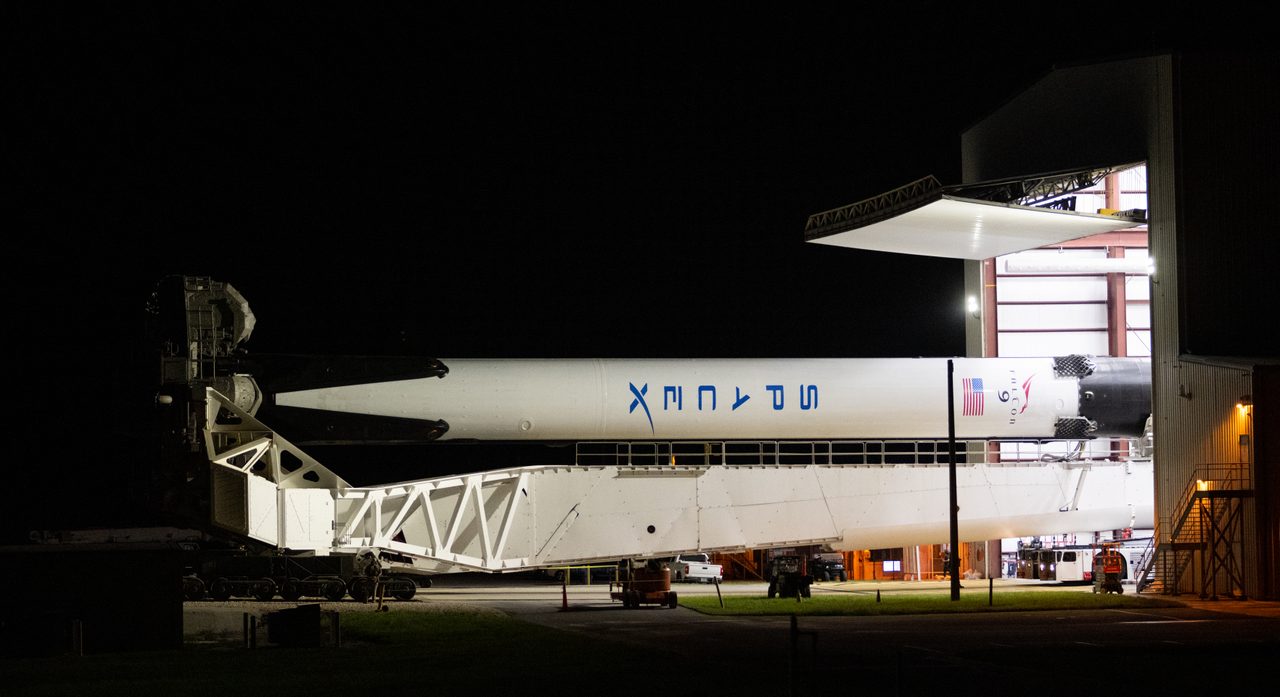
Falcon 9 Block 5 is scheduled to launch USSF-627 on 10 November 2026 at 03:03 UTC. Later in the week, United Launch Alliance's Vulcan VC6L is scheduled to carry Amazon Leo's LV-01 mission on 13 November 2026 at 17:54 UTC, subject to schedule changes.
Amazon Leo has placed 396 satellites into orbit across 14 production missions as of 8 November 2026. Consumer service has not yet opened; Amazon says initial service will begin before the end of 2026 in the US, UK, France, Germany and Canada.
Also watch Starship Flight 15, carrying Starlink Group 31-2, provisionally scheduled for 13 November 2026 at 22:45 UTC. Its status remains to be confirmed, unlike the go-for-launch listings for Vulcan and the week's Falcon 9 defence missions.
Frequently Asked Questions
What time is the Long March 12 launch on 8 November 2026?
When is Amazon Leo's next launch, and is service available?
Cite this article
Pick a style, then copy it or download it for your reference manager.Orbital Radar. (2026, November 8). Long March targets orbit: Orbital Briefing, 8 November. Retrieved November 8, 2026, from https://orbitalradar.com/blog/orbital-briefing-2026-11-08
“Long March targets orbit: Orbital Briefing, 8 November.” Orbital Radar, 8 Nov. 2026, orbitalradar.com/blog/orbital-briefing-2026-11-08. Accessed 8 Nov. 2026.
Orbital Radar (2026) Long March targets orbit: Orbital Briefing, 8 November. Available at: https://orbitalradar.com/blog/orbital-briefing-2026-11-08 (Accessed: 8 November 2026).
Orbital Radar. “Long March targets orbit: Orbital Briefing, 8 November.” Last modified November 8, 2026. https://orbitalradar.com/blog/orbital-briefing-2026-11-08.
@misc{orbitalradar_blog_orbital_briefing_2026_11_08,
  author       = {{Orbital Radar}},
  title        = {Long March targets orbit: Orbital Briefing, 8 November},
  year         = {2026},
  month        = nov,
  howpublished = {\url{https://orbitalradar.com/blog/orbital-briefing-2026-11-08}},
  url          = {https://orbitalradar.com/blog/orbital-briefing-2026-11-08},
  urldate      = {2026-11-08},
  note         = {Accessed 2026-11-08}
}
TY - ELEC AU - Orbital Radar, TI - Long March targets orbit: Orbital Briefing, 8 November PY - 2026 DA - 2026/11/08 PB - Orbital Radar UR - https://orbitalradar.com/blog/orbital-briefing-2026-11-08 Y2 - 2026/11/08 LA - en ER -
Live figures change, so keep the date you accessed the page. How to cite Orbital Radar