23 November: Amazon Leo targets return to orbit on Ariane

Amazon Leo targets a return to satellite deployment aboard Ariane 64, with a conditional licence waiver shaping its rollout. Progress and Shenzhou launches follow this week.
| Active satellites | 16,716 |
| Starlink active | 9,750 |
| Catalogued objects | 32,155 |
| Active close approaches | 19 |
| People in space | 10 |
Amazon Leo is scheduled to resume satellite deployment on Monday, 23 November, with its LE-04 mission aboard an Arianespace Ariane 64. Liftoff is targeted for 11:09 UTC into low Earth orbit, where broadband satellites operate relatively close to Earth to reduce communications delays.
Amazon Leo had placed 396 production satellites into orbit as of 23 November 2026, according to Orbital Radar tracking data. Its latest completed deployment was LA-08 aboard an Atlas V 551 on 2 July 2026; today's mission remains scheduled rather than completed.
The constellation, called Project Kuiper before November 2025, has yet to open consumer service. Amazon says initial service will begin before the end of 2026 in the US, UK, France, Germany and Canada; selected businesses have been testing an enterprise preview since November 2025.
A deployment deadline with commercial consequences
Amazon missed its Federal Communications Commission interim milestone of 1,616 working satellites by 30 July 2026. A conditional waiver granted on 5 June 2026 keeps its licence in force, but all 3,232 first-generation satellites remain due by 30 July 2029.
Satellites launched after 30 July 2026 have lower spectrum priority until Amazon reaches 1,616 satellites in orbit and working, or until the waiver's time limit applies. Spectrum priority governs precedence when satellite networks could interfere with one another, making the deployment timetable more than a manufacturing target.
Today's launch would therefore advance a network whose regulatory and commercial schedules are closely linked. Launch status and subsequent deployment opportunities can be followed on Orbital Radar's Launch Schedule.
Orbital traffic: proximity is not collision probability

Orbital Radar tracking data lists 16,716 active satellites in orbit on 23 November 2026. That population sits within a catalogue that also includes debris and spent rocket bodies, making reliable identification and trajectory monitoring increasingly important.
Orbital Radar tracking data lists 19 active close approaches on 23 November 2026. Among the monitored pairs are OBJECT F and OBJECT G at approximately 1.32 km, and COSMOS 2581 and COSMOS 2583 at approximately 1.74 km.
A separation estimate alone is not a collision probability: uncertainty in the predicted positions and the objects' relative motion also matter. Some listed pairs, including PROBA-3 CSC and PROBA-3 OSC, belong to formation-flying missions; Orbital Radar's space situational awareness toolkit provides context for monitoring orbital traffic.
What to Watch
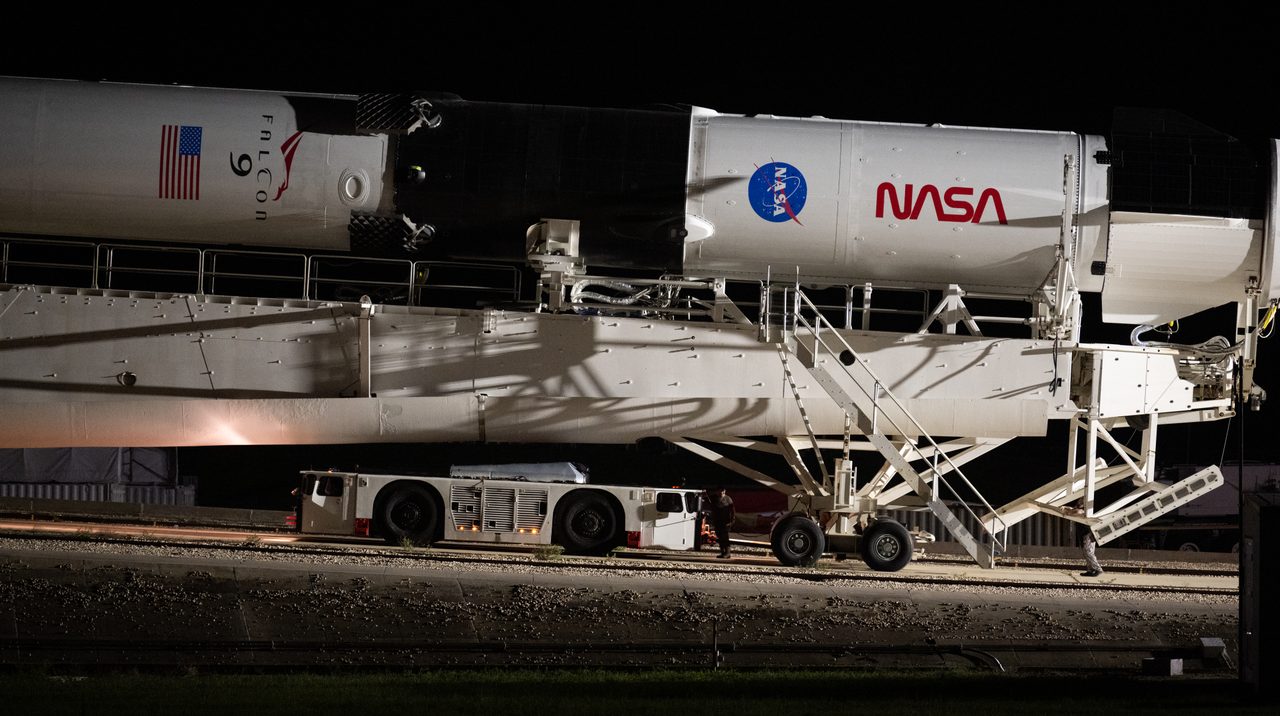
Progress MS-36, also designated 97P, is provisionally scheduled aboard Soyuz 2.1b for 24 November at 10:13 UTC, with confirmation pending. SpaceX's Falcon 9 USSF-266 mission follows on the schedule at 15:55 UTC, targeting a polar orbit.
China's Shenzhou 24 is scheduled for 25 November at 00:18 UTC aboard Long March 2F/G. The mission comes as China outlines its path towards a crewed Moon landing before 2030, a separate programme milestone rather than the purpose of this flight.
Frequently Asked Questions
When is the next Amazon Leo satellite launch?
Is Amazon Leo internet available to consumers yet?
Cite this article
Pick a style, then copy it or download it for your reference manager.Orbital Radar. (2026, November 23). 23 November: Amazon Leo targets return to orbit on Ariane. Retrieved November 23, 2026, from https://orbitalradar.com/blog/orbital-briefing-2026-11-23
“23 November: Amazon Leo targets return to orbit on Ariane.” Orbital Radar, 23 Nov. 2026, orbitalradar.com/blog/orbital-briefing-2026-11-23. Accessed 23 Nov. 2026.
Orbital Radar (2026) 23 November: Amazon Leo targets return to orbit on Ariane. Available at: https://orbitalradar.com/blog/orbital-briefing-2026-11-23 (Accessed: 23 November 2026).
Orbital Radar. “23 November: Amazon Leo targets return to orbit on Ariane.” Last modified November 23, 2026. https://orbitalradar.com/blog/orbital-briefing-2026-11-23.
@misc{orbitalradar_blog_orbital_briefing_2026_11_23,
  author       = {{Orbital Radar}},
  title        = {23 November: Amazon Leo targets return to orbit on Ariane},
  year         = {2026},
  month        = nov,
  howpublished = {\url{https://orbitalradar.com/blog/orbital-briefing-2026-11-23}},
  url          = {https://orbitalradar.com/blog/orbital-briefing-2026-11-23},
  urldate      = {2026-11-23},
  note         = {Accessed 2026-11-23}
}
TY - ELEC AU - Orbital Radar, TI - 23 November: Amazon Leo targets return to orbit on Ariane PY - 2026 DA - 2026/11/23 PB - Orbital Radar UR - https://orbitalradar.com/blog/orbital-briefing-2026-11-23 Y2 - 2026/11/23 LA - en ER -
Live figures change, so keep the date you accessed the page. How to cite Orbital Radar