Voyager 1 reaches one light-day: 19 November orbital briefing
Voyager 1’s reported one-light-day milestone leads today’s briefing, alongside satellite close approaches, quiet space weather and the next launch opportunities.
| Active satellites | 16,688 |
| Starlink active | 9,810 |
| Catalogued objects | 32,154 |
| Active close approaches | 20 |
| People in space | 10 |
Voyager 1 has reportedly reached a distance of one light-day from Earth, a milestone that puts the practical limits of deep-space communication into perspective. A radio command travelling at light speed now takes about a day to reach the spacecraft; any response must make the same journey back.
The milestone concerns distance from Earth, rather than a new boundary in space. For mission controllers, its significance is operational: communicating with Voyager 1 requires planning around a delay that rules out real-time intervention. It is a different kind of spaceflight from the increasingly crowded activity close to home.
A crowded orbital neighbourhood
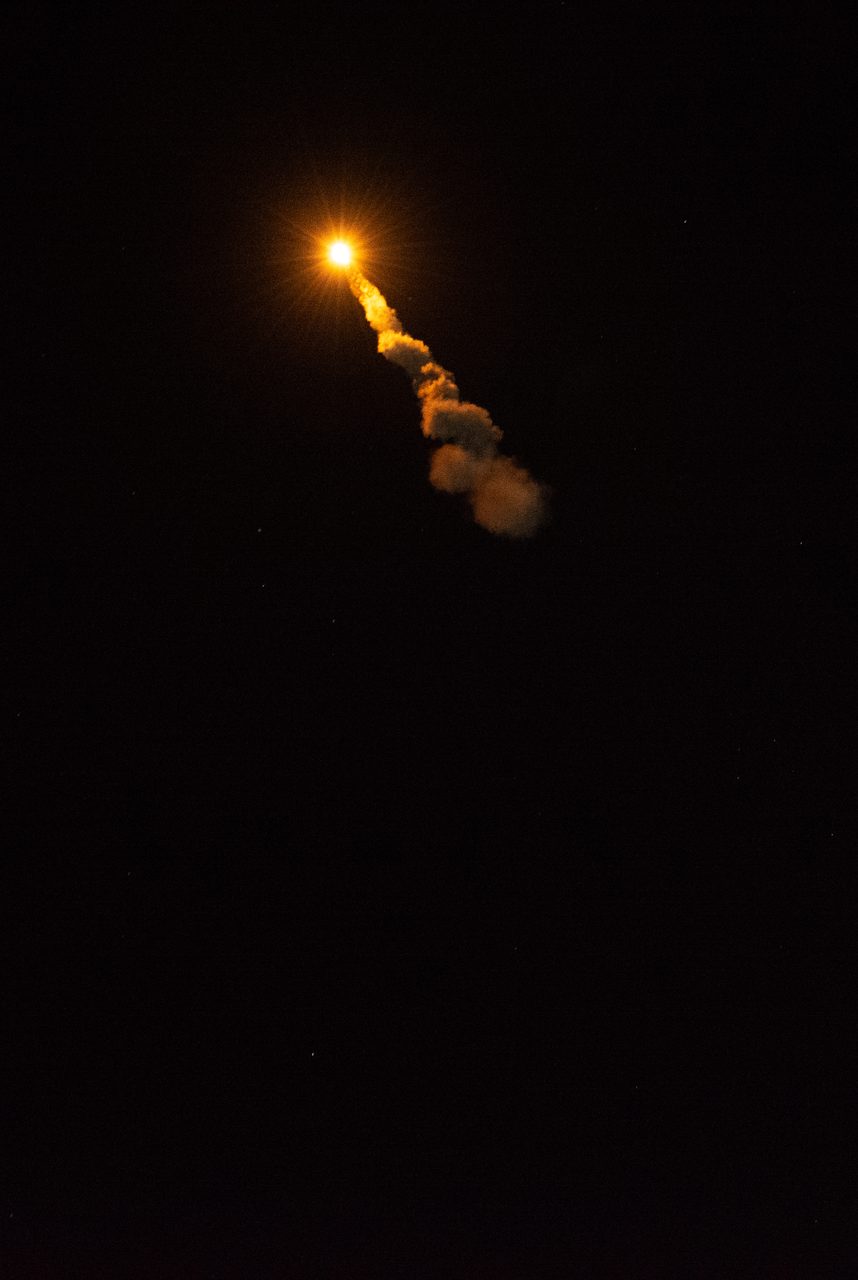
Orbital Radar tracking data records 16,688 active satellites in orbit as of 19 November 2026. That population supports communications, Earth observation and other services, while increasing the importance of reliable tracking and coordination between operators.
Starlink accounts for 9,810 operational satellites as of 19 November 2026, according to Orbital Radar tracking data. Operational spacecraft should not be confused with satellites still raising their orbits or being brought down: those phases introduce different trajectories and monitoring needs.
The Orbital Radar Starlink Tracker provides a constellation-focused view, while the Satellite Library offers a broader route into the orbital population. Neither the size of a fleet nor a close encounter alone establishes that a collision is likely.
Close approaches, quiet space weather
Orbital Radar tracking data lists 20 active close approaches being tracked as of 19 November 2026. Among the encounters, FENGYUN 1C debris fragments have a listed minimum separation of approximately 0.92 km, while STARLINK-2608 and YAOGAN-43 02A have a listed minimum of approximately 1.54 km.
These separations are not collision probabilities. Assessing danger also requires the uncertainty in each object's predicted position, its relative motion and whether an operator can manoeuvre. The Orbital Radar Debris Map places the debris population in context without turning every nearby passage into an emergency.
Space weather is comparatively quiet: Kp, an index of global geomagnetic disturbance, stands at 0. The current risk indicators are green for low Earth orbit, geostationary orbit and the International Space Station, although those indicators do not remove the need for continued monitoring.
What to Watch
SpaceX's Falcon 9 mission USSF-317 is scheduled for 20 November at 04:28 UTC, followed by Long March 8A at 11:59 UTC. Both are listed as go for launch to low Earth orbit; the Chinese mission's SatNet group designation remains provisional.
Further ahead, Arianespace's Ariane 64 mission LE-04 for Amazon Leo is scheduled no earlier than 23 November at 11:09 UTC. Amazon's broadband constellation has not yet opened consumer service, making continued deployment an important programme milestone. Launch timings remain subject to change; follow the Orbital Radar Launch Schedule for the upcoming sequence.
Frequently Asked Questions
What does Voyager 1 being one light-day from Earth mean?
When is the next Amazon Leo launch?
Cite this article
Pick a style, then copy it or download it for your reference manager.Orbital Radar. (2026, November 19). Voyager 1 reaches one light-day: 19 November orbital briefing. Retrieved November 19, 2026, from https://orbitalradar.com/blog/orbital-briefing-2026-11-19
“Voyager 1 reaches one light-day: 19 November orbital briefing.” Orbital Radar, 19 Nov. 2026, orbitalradar.com/blog/orbital-briefing-2026-11-19. Accessed 19 Nov. 2026.
Orbital Radar (2026) Voyager 1 reaches one light-day: 19 November orbital briefing. Available at: https://orbitalradar.com/blog/orbital-briefing-2026-11-19 (Accessed: 19 November 2026).
Orbital Radar. “Voyager 1 reaches one light-day: 19 November orbital briefing.” Last modified November 19, 2026. https://orbitalradar.com/blog/orbital-briefing-2026-11-19.
@misc{orbitalradar_blog_orbital_briefing_2026_11_19,
  author       = {{Orbital Radar}},
  title        = {Voyager 1 reaches one light-day: 19 November orbital briefing},
  year         = {2026},
  month        = nov,
  howpublished = {\url{https://orbitalradar.com/blog/orbital-briefing-2026-11-19}},
  url          = {https://orbitalradar.com/blog/orbital-briefing-2026-11-19},
  urldate      = {2026-11-19},
  note         = {Accessed 2026-11-19}
}
TY - ELEC AU - Orbital Radar, TI - Voyager 1 reaches one light-day: 19 November orbital briefing PY - 2026 DA - 2026/11/19 PB - Orbital Radar UR - https://orbitalradar.com/blog/orbital-briefing-2026-11-19 Y2 - 2026/11/19 LA - en ER -
Live figures change, so keep the date you accessed the page. How to cite Orbital Radar