Vulcan failure investigation: orbital briefing, 18 November
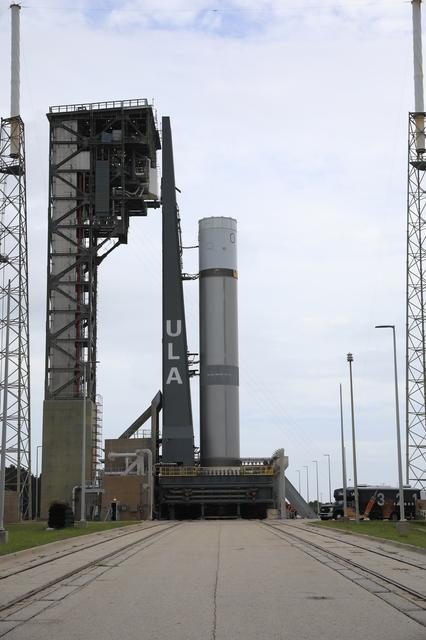
ULA is investigating low booster performance after Vulcan's Amazon Leo launch failure. Meanwhile, an Ariane launch for the constellation remains scheduled for 23 November.
| Active satellites | 16,692 |
| Starlink active | 9,813 |
| Catalogued objects | 32,149 |
| Active close approaches | 21 |
| People in space | 10 |
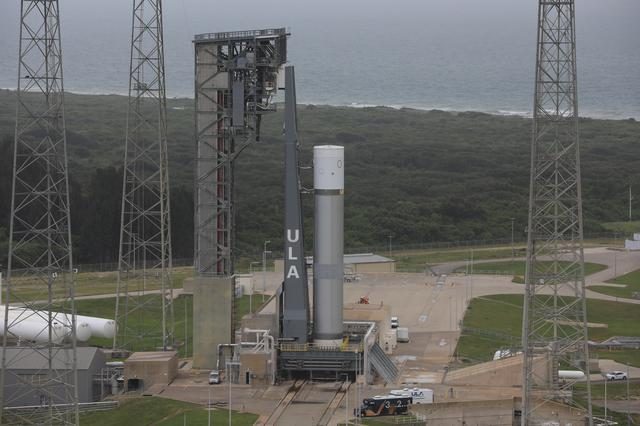
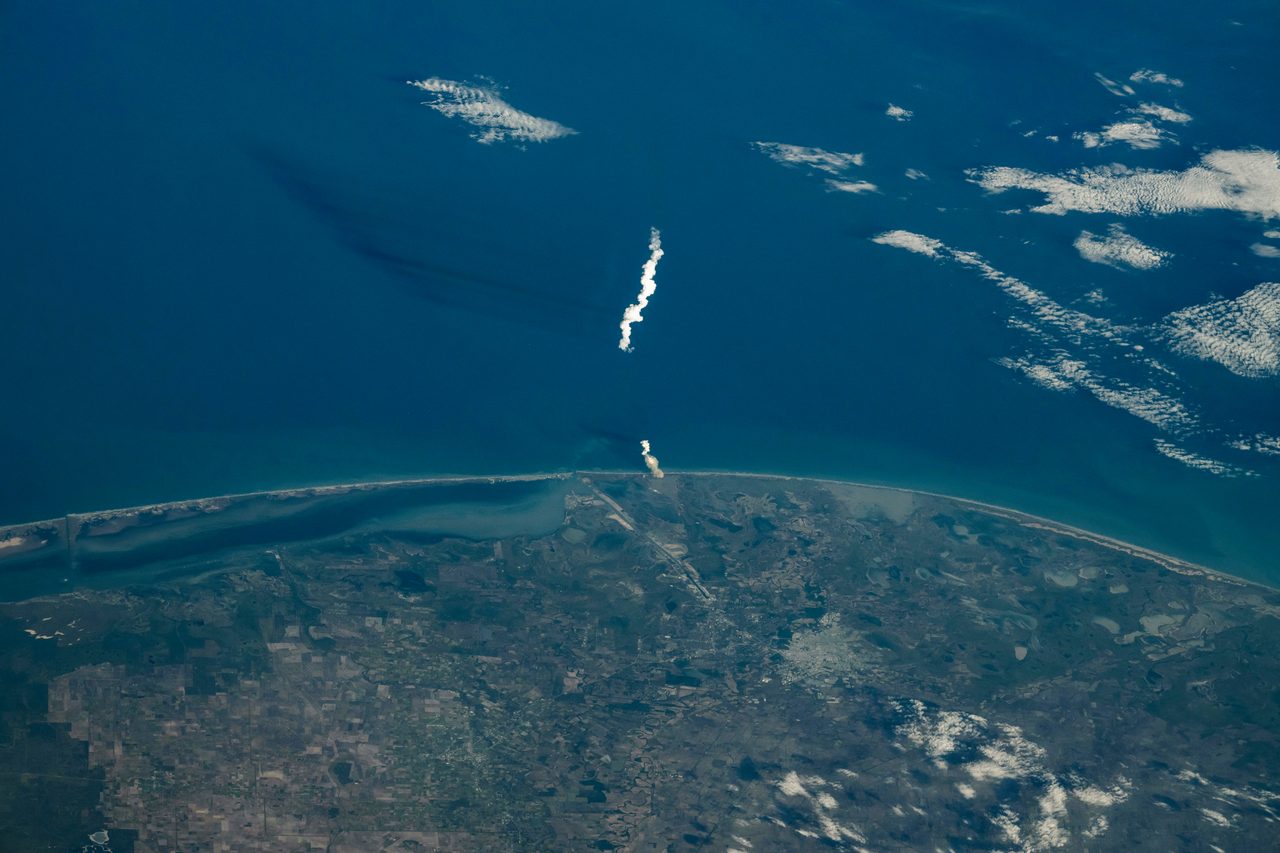
United Launch Alliance is investigating low booster performance following the failure of its Vulcan VC6L mission carrying Amazon Leo satellites. The launch failed on 15 November 2026 after lifting off at 17:40 UTC; the investigation's focus should not be mistaken for a confirmed root cause.
The failure brings renewed attention to Amazon's broadband deployment programme, with another mission scheduled aboard Ariane 64 on 23 November. Amazon Leo has not yet opened consumer service, although the company says initial service will begin before the end of 2026 in the US, UK, France, Germany and Canada. Selected businesses have been using an enterprise preview since November 2025.
Amazon Leo faces deployment pressure
Amazon Leo, formerly Project Kuiper, remains subject to a conditional Federal Communications Commission waiver after missing its interim deployment milestone on 30 July 2026. Its first-generation licence covers 3,232 satellites, all due by 30 July 2029; satellites launched after the missed milestone carry lower spectrum priority under the waiver's conditions.
Starlink had 9,813 operational satellites on 18 November 2026, according to Orbital Radar tracking data. That operational fleet illustrates the scale of the established competition, though satellite numbers alone do not measure coverage, capacity or service quality. Orbital Radar's Starlink Tracker follows the constellation, including spacecraft raising their orbits or deorbiting.
Crowded orbits, quiet geomagnetic conditions

Orbital Radar's live catalogue listed 32,149 tracked objects on 18 November 2026, including 10,212 debris objects and 2,218 rocket bodies. Among the close approaches being tracked, OBJECT B and OBJECT C have a listed minimum separation of approximately 0.53 km. Separation alone does not establish collision probability: uncertainty in the predicted positions also matters, and a close approach is not necessarily an emergency.
The Orbital Radar Debris Map puts the tracked population in context. Meanwhile, the Kp index (a measure of global geomagnetic disturbance) stood at 0 on 18 November 2026, according to Orbital Radar tracking data. NASA's astronomy picture features an M-class solar flare, but that image should not be read as evidence of a current geomagnetic storm; the live X-ray risk indicator is yellow while the geomagnetic indicator is green.
What to Watch
A Long March 2D carrying an unidentified payload is scheduled for 18 November at 22:50 UTC. Next comes Falcon 9's USSF-317 mission, scheduled for 20 November at 02:46 UTC into low Earth orbit, while a Long March 8A SatNet mission remains provisional for 11:00 UTC that day.
Falcon 9's NROL-136 mission is scheduled for 21 November at 12:30 UTC. Amazon Leo's Ariane 64 LE-04 mission follows no earlier than 23 November at 11:09 UTC, making it a deployment to watch after the Vulcan failure. Timings and status updates can be followed on the Orbital Radar Launch Schedule.
Frequently Asked Questions
Why did the Vulcan Amazon Leo launch fail?
When is the next Amazon Leo launch?
Cite this article
Pick a style, then copy it or download it for your reference manager.Orbital Radar. (2026, November 18). Vulcan failure investigation: orbital briefing, 18 November. Retrieved November 18, 2026, from https://orbitalradar.com/blog/orbital-briefing-2026-11-18
“Vulcan failure investigation: orbital briefing, 18 November.” Orbital Radar, 18 Nov. 2026, orbitalradar.com/blog/orbital-briefing-2026-11-18. Accessed 18 Nov. 2026.
Orbital Radar (2026) Vulcan failure investigation: orbital briefing, 18 November. Available at: https://orbitalradar.com/blog/orbital-briefing-2026-11-18 (Accessed: 18 November 2026).
Orbital Radar. “Vulcan failure investigation: orbital briefing, 18 November.” Last modified November 18, 2026. https://orbitalradar.com/blog/orbital-briefing-2026-11-18.
@misc{orbitalradar_blog_orbital_briefing_2026_11_18,
  author       = {{Orbital Radar}},
  title        = {Vulcan failure investigation: orbital briefing, 18 November},
  year         = {2026},
  month        = nov,
  howpublished = {\url{https://orbitalradar.com/blog/orbital-briefing-2026-11-18}},
  url          = {https://orbitalradar.com/blog/orbital-briefing-2026-11-18},
  urldate      = {2026-11-18},
  note         = {Accessed 2026-11-18}
}
TY - ELEC AU - Orbital Radar, TI - Vulcan failure investigation: orbital briefing, 18 November PY - 2026 DA - 2026/11/18 PB - Orbital Radar UR - https://orbitalradar.com/blog/orbital-briefing-2026-11-18 Y2 - 2026/11/18 LA - en ER -
Live figures change, so keep the date you accessed the page. How to cite Orbital Radar