Starliner Eyes 2026 Cargo Mission Amid Close Satellite Approaches

Boeing's Starliner is poised for a potential 2026 cargo mission to the ISS, while multiple close satellite approaches underscore orbital congestion challenges.
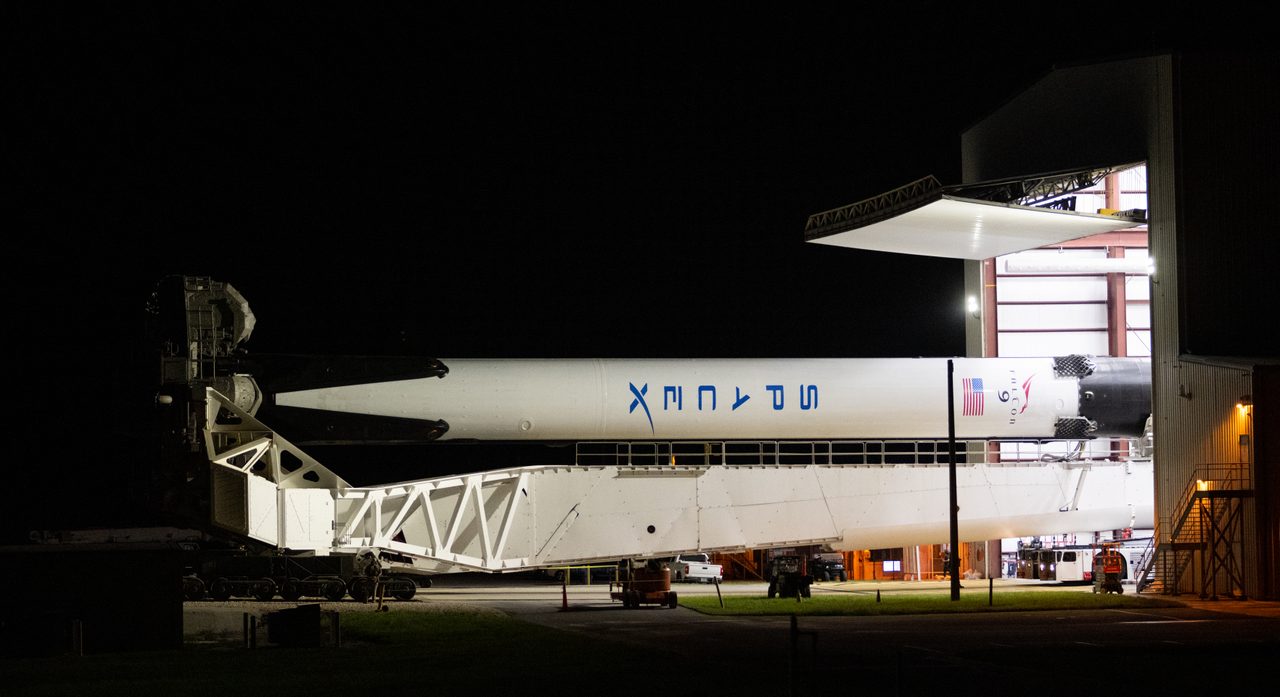
Boeing's Starliner capsule, previously focused on crewed missions, is now being considered for a cargo run to the International Space Station (ISS) in 2026. This development comes as NASA continues to diversify its cargo delivery options to the ISS. The Starliner, which has faced delays in its crewed programme, could provide a new avenue for transporting supplies and experiments. Details of the mission are still under discussion, but the potential inclusion of Starliner in the ISS cargo fleet marks a significant shift in its operational role.
Orbital Congestion: A Growing Concern
Recent close approaches between satellites highlight the increasing congestion in Earth's orbit. Notably, OBJECT A came within 0.42 km of OBJECT B, raising concerns about potential collisions. Such events underscore the need for improved tracking and manoeuvring capabilities to prevent accidents. The Orbital Radar Debris Map provides real-time updates on these close encounters, offering valuable insights into the dynamics of space traffic.
What to Watch
Although no launches are scheduled for the immediate future, the space community remains attentive to upcoming re-entries and orbital adjustments. The Orbital Radar Re-entry Tracker lists 13 predicted re-entries soon, which could provide opportunities for observation. Additionally, the ongoing development of laser communications by K2 Space, supported by a $22.9 million contract from the US Space Force, promises advancements in satellite communication technology.
Frequently Asked Questions
What is Boeing's Starliner used for?
How are satellite close approaches monitored?
Cite this article
Pick a style, then copy it or download it for your reference manager.Orbital Radar. (2026, May 15). Starliner Eyes 2026 Cargo Mission Amid Close Satellite Approaches. Retrieved November 12, 2026, from https://orbitalradar.com/blog/orbital-briefing-2026-05-15
“Starliner Eyes 2026 Cargo Mission Amid Close Satellite Approaches.” Orbital Radar, 15 May 2026, orbitalradar.com/blog/orbital-briefing-2026-05-15. Accessed 12 Nov. 2026.
Orbital Radar (2026) Starliner Eyes 2026 Cargo Mission Amid Close Satellite Approaches. Available at: https://orbitalradar.com/blog/orbital-briefing-2026-05-15 (Accessed: 12 November 2026).
Orbital Radar. “Starliner Eyes 2026 Cargo Mission Amid Close Satellite Approaches.” Last modified May 15, 2026. https://orbitalradar.com/blog/orbital-briefing-2026-05-15.
@misc{orbitalradar_blog_orbital_briefing_2026_05_15,
  author       = {{Orbital Radar}},
  title        = {Starliner Eyes 2026 Cargo Mission Amid Close Satellite Approaches},
  year         = {2026},
  month        = may,
  howpublished = {\url{https://orbitalradar.com/blog/orbital-briefing-2026-05-15}},
  url          = {https://orbitalradar.com/blog/orbital-briefing-2026-05-15},
  urldate      = {2026-11-12},
  note         = {Accessed 2026-11-12}
}
TY - ELEC AU - Orbital Radar, TI - Starliner Eyes 2026 Cargo Mission Amid Close Satellite Approaches PY - 2026 DA - 2026/05/15 PB - Orbital Radar UR - https://orbitalradar.com/blog/orbital-briefing-2026-05-15 Y2 - 2026/11/12 LA - en ER -
Live figures change, so keep the date you accessed the page. How to cite Orbital Radar