Starship caught after orbital flight: 15 November 2026 briefing
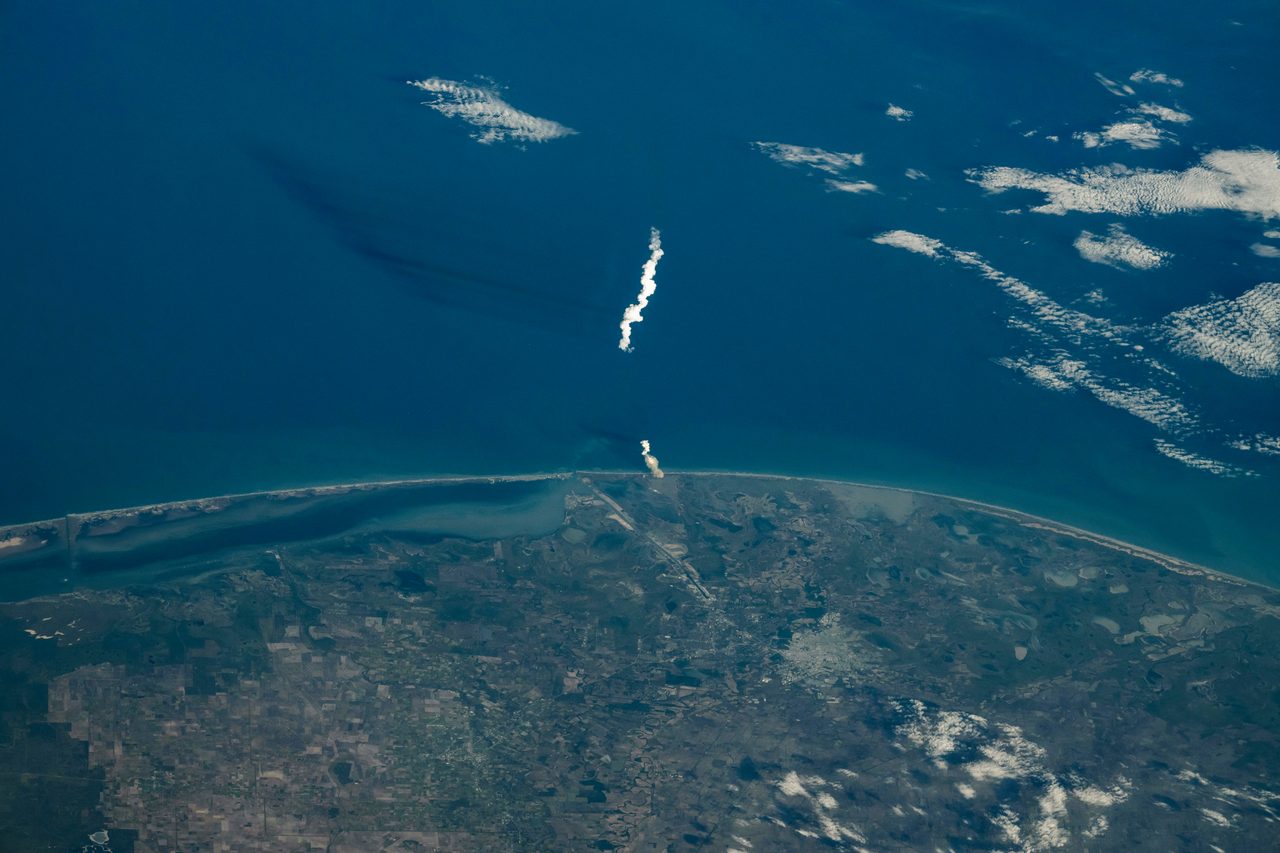
SpaceX has reportedly caught a Starship upper stage returning from orbit. Sunday's briefing also covers close approaches, Tiangong and the next Amazon Leo launch.
| Active satellites | 16,681 |
| Starlink active | 9,821 |
| Catalogued objects | 32,100 |
| Active close approaches | 13 |
| People in space | 10 |
SpaceX has caught a Starship upper stage returning from orbit for the first time, according to reports describing a significant test of the company's recovery system. The achievement concerns the spacecraft itself, rather than the booster that lifts it away from the launch pad.
Starship Flight 15, carrying Starlink Group 31-2, launched successfully at 22:47 UTC on 13 November 2026, according to Orbital Radar tracking data. SpaceX is separately investigating why the flight's booster aborted its planned catch by the launch tower's mechanical arms, commonly called “chopsticks”.
Those outcomes should be distinguished: recovering the upper stage demonstrates a different part of the system from recovering the booster. A successful catch alone does not establish how much inspection or refurbishment will be needed before another flight; the vehicle's role is explained in Orbital Radar's launch vehicle guide.
Close approaches need context
Orbital Radar tracking data lists 13 active close approaches as of 15 November 2026. Among the closest listed encounters are TIANHUI 5C and TIANHUI 5D at approximately 0.51 km, and SUPERVIEW NEO-2 03 and SUPERVIEW NEO-2 04 at approximately 0.58 km.
Separation alone is not a collision probability. Assessing a conjunction, the term for a close orbital encounter, also requires the objects' relative motion and uncertainty in their predicted positions; satellites operating together can have close approaches by design.
Starlink had 9,821 operational satellites as of 15 November 2026, according to Orbital Radar tracking data. The space situational awareness toolkit provides context for monitoring this increasingly busy environment without treating every nearby passage as an emergency.
Tiangong visit and Webb's ancient ice
China's Tiangong space station is expected to receive its first foreign astronaut in two weeks, according to Universe Today. The visit would mark a change in participation aboard the Chinese station; Orbital Radar's China in Space hub follows the country's wider fleet and launch programme.
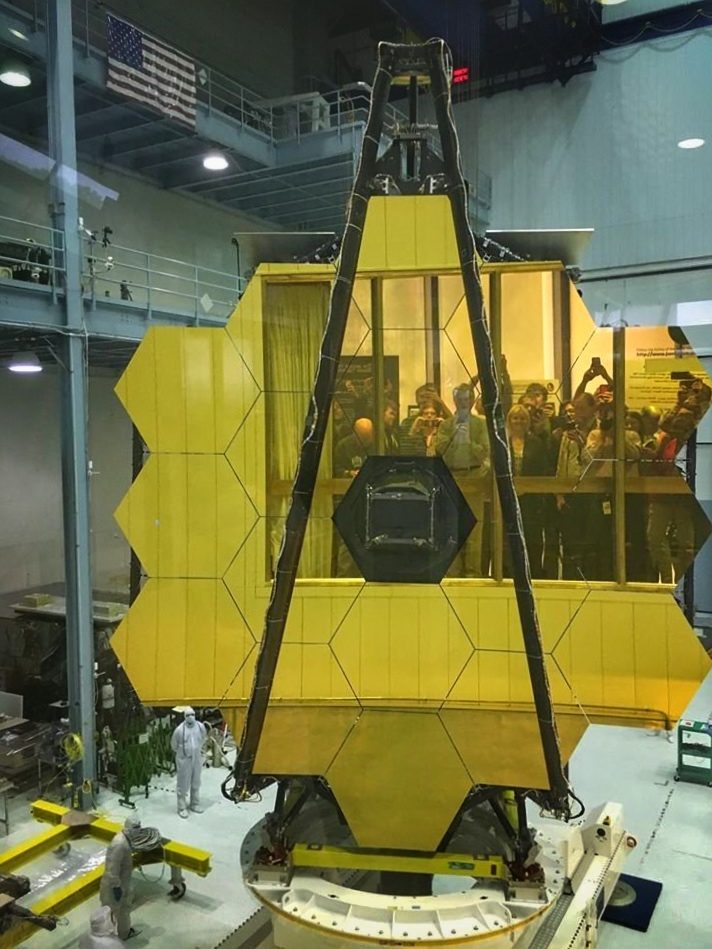
Separately, Ars Technica reports that the James Webb Space Telescope has identified ice older than the star it orbits. The finding concerns how material survives the formation of a stellar system, potentially preserving a chemical inheritance from the cloud that existed before the star.
What to Watch
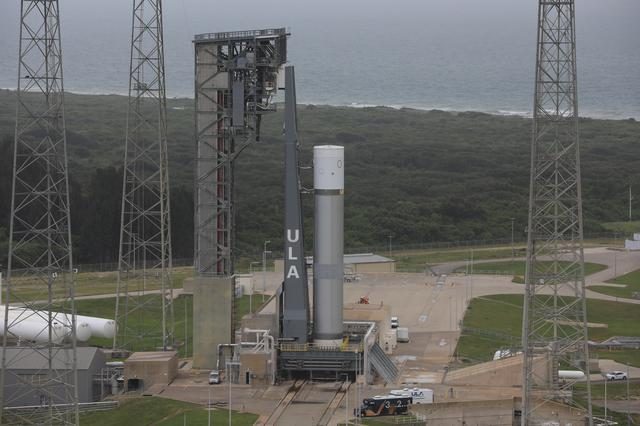
United Launch Alliance's Vulcan VC6L is scheduled to launch Amazon Leo mission LV-01 at 17:11 UTC on 15 November 2026, targeting low Earth orbit. Amazon Leo has already placed 396 satellites into orbit across 14 production missions, but consumer service has not yet opened.
Next on the schedule are Falcon 9 mission USSF-317 at 03:14 UTC on 18 November and a Long March 2D launch carrying an unidentified payload at 22:50 UTC that day. These remain planned events rather than completed launches; timing and status can be followed on the Orbital Radar launch schedule.
Frequently Asked Questions
Did SpaceX catch Starship after an orbital flight?
When is the next Amazon Leo launch?
Cite this article
Pick a style, then copy it or download it for your reference manager.Orbital Radar. (2026, November 15). Starship caught after orbital flight: 15 November 2026 briefing. Retrieved November 15, 2026, from https://orbitalradar.com/blog/orbital-briefing-2026-11-15
“Starship caught after orbital flight: 15 November 2026 briefing.” Orbital Radar, 15 Nov. 2026, orbitalradar.com/blog/orbital-briefing-2026-11-15. Accessed 15 Nov. 2026.
Orbital Radar (2026) Starship caught after orbital flight: 15 November 2026 briefing. Available at: https://orbitalradar.com/blog/orbital-briefing-2026-11-15 (Accessed: 15 November 2026).
Orbital Radar. “Starship caught after orbital flight: 15 November 2026 briefing.” Last modified November 15, 2026. https://orbitalradar.com/blog/orbital-briefing-2026-11-15.
@misc{orbitalradar_blog_orbital_briefing_2026_11_15,
  author       = {{Orbital Radar}},
  title        = {Starship caught after orbital flight: 15 November 2026 briefing},
  year         = {2026},
  month        = nov,
  howpublished = {\url{https://orbitalradar.com/blog/orbital-briefing-2026-11-15}},
  url          = {https://orbitalradar.com/blog/orbital-briefing-2026-11-15},
  urldate      = {2026-11-15},
  note         = {Accessed 2026-11-15}
}
TY - ELEC AU - Orbital Radar, TI - Starship caught after orbital flight: 15 November 2026 briefing PY - 2026 DA - 2026/11/15 PB - Orbital Radar UR - https://orbitalradar.com/blog/orbital-briefing-2026-11-15 Y2 - 2026/11/15 LA - en ER -
Live figures change, so keep the date you accessed the page. How to cite Orbital Radar