Omega Centauri: A Stellar Enigma in Our Galactic Halo
Omega Centauri, the largest globular cluster in the Milky Way, may hold clues to galactic mergers. Discover its mysteries and stellar populations.
| Active satellites | 15,745 |
| Catalogued objects | 31,357 |
| Starlink active | 9,940 |
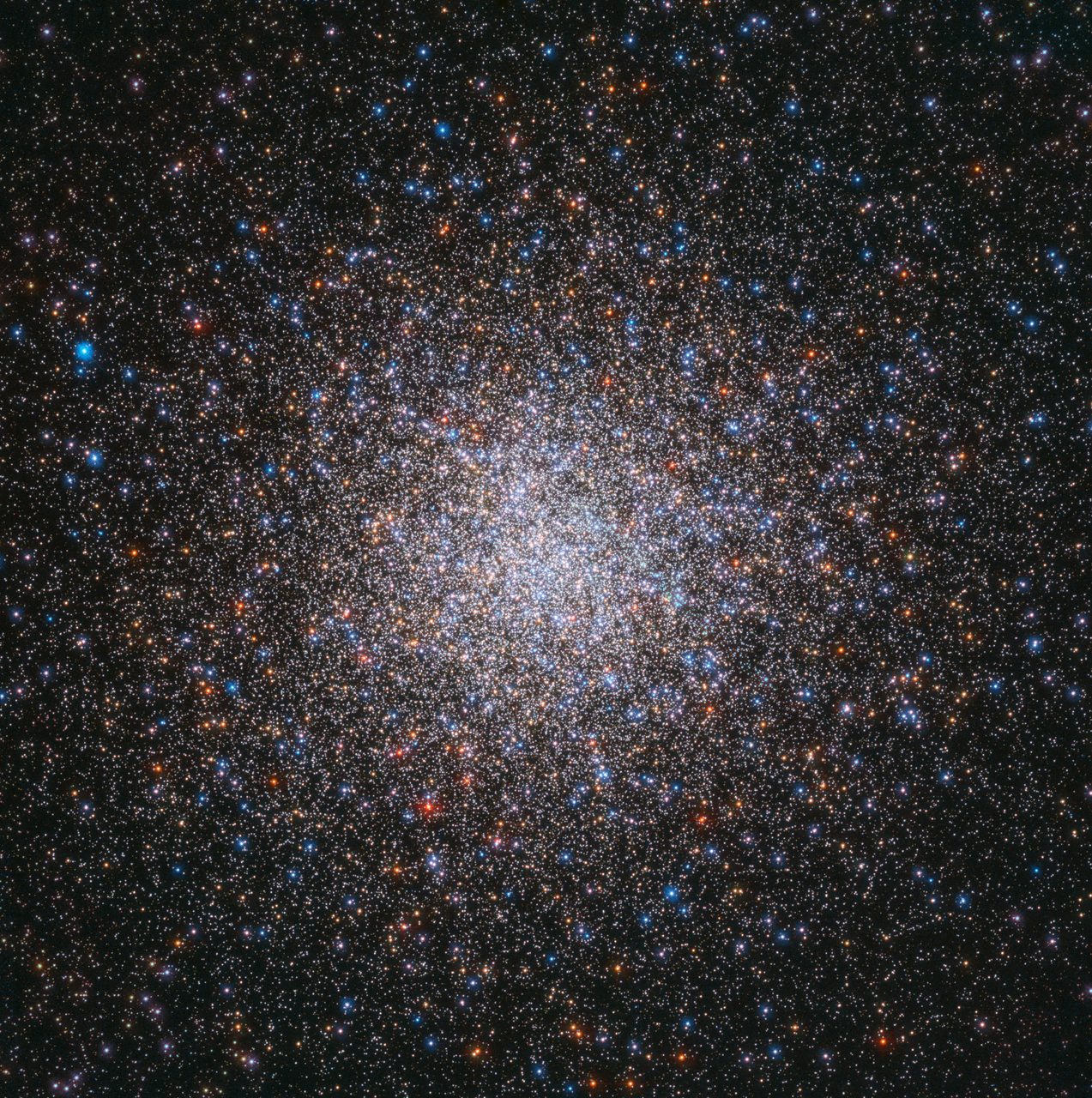
Omega Centauri, also known as NGC 5139, is a globular star cluster that stands out as the largest and brightest of its kind within the Milky Way galaxy. Located approximately 15,000 light-years away, it contains about 10 million stars packed into a region 150 light-years in diameter. This cluster is notable not only for its size but also for its unique stellar composition, which includes stars of varying ages and chemical abundances. Such diversity suggests that Omega Centauri might be the remnant core of a small galaxy that merged with the Milky Way.
Recent studies using the Hubble Space Telescope have provided intriguing insights into this dense cluster. Evidence points to the presence of a massive black hole near its centre, adding to the complexity of its structure. The yellowish hue of Omega Centauri's red giant stars makes them easily identifiable in telescopic images, offering a visual treat for astronomers and enthusiasts alike.
Connecting the Dots in Space
Omega Centauri's unique characteristics provide a window into the processes of galactic evolution and merger events. Understanding such clusters helps astronomers piece together the history of our galaxy and the dynamics of its halo. The presence of different stellar populations within Omega Centauri challenges the traditional view of globular clusters as simple stellar systems.
For those interested in observing this celestial marvel, Omega Centauri is best viewed from the Southern Hemisphere. Its location and brightness make it a popular target for both amateur and professional astronomers. While the cluster itself is not directly observable through Orbital Radar's tools, enthusiasts can explore other celestial phenomena using the Pass Predictor to plan their stargazing sessions.
Frequently Asked Questions
What is Omega Centauri?
How far is Omega Centauri from Earth?
📎 Cite this article · data available
Orbital Radar Newsroom. (2026). Omega Centauri: A Stellar Enigma in Our Galactic Halo. Orbital Radar. https://orbitalradar.com/blog/cosmic-gallery-2026-09-26"Omega Centauri: A Stellar Enigma in Our Galactic Halo." Orbital Radar, 26 September 2026, https://orbitalradar.com/blog/cosmic-gallery-2026-09-26.@misc{orbitalradar_cosmic_gallery_2026_09_26,
title = {Omega Centauri: A Stellar Enigma in Our Galactic Halo},
author = {{Orbital Radar}},
year = {2026},
howpublished = {\url{https://orbitalradar.com/blog/cosmic-gallery-2026-09-26}}
}