Celestial Reflections: Perseid Meteor and Milky Way
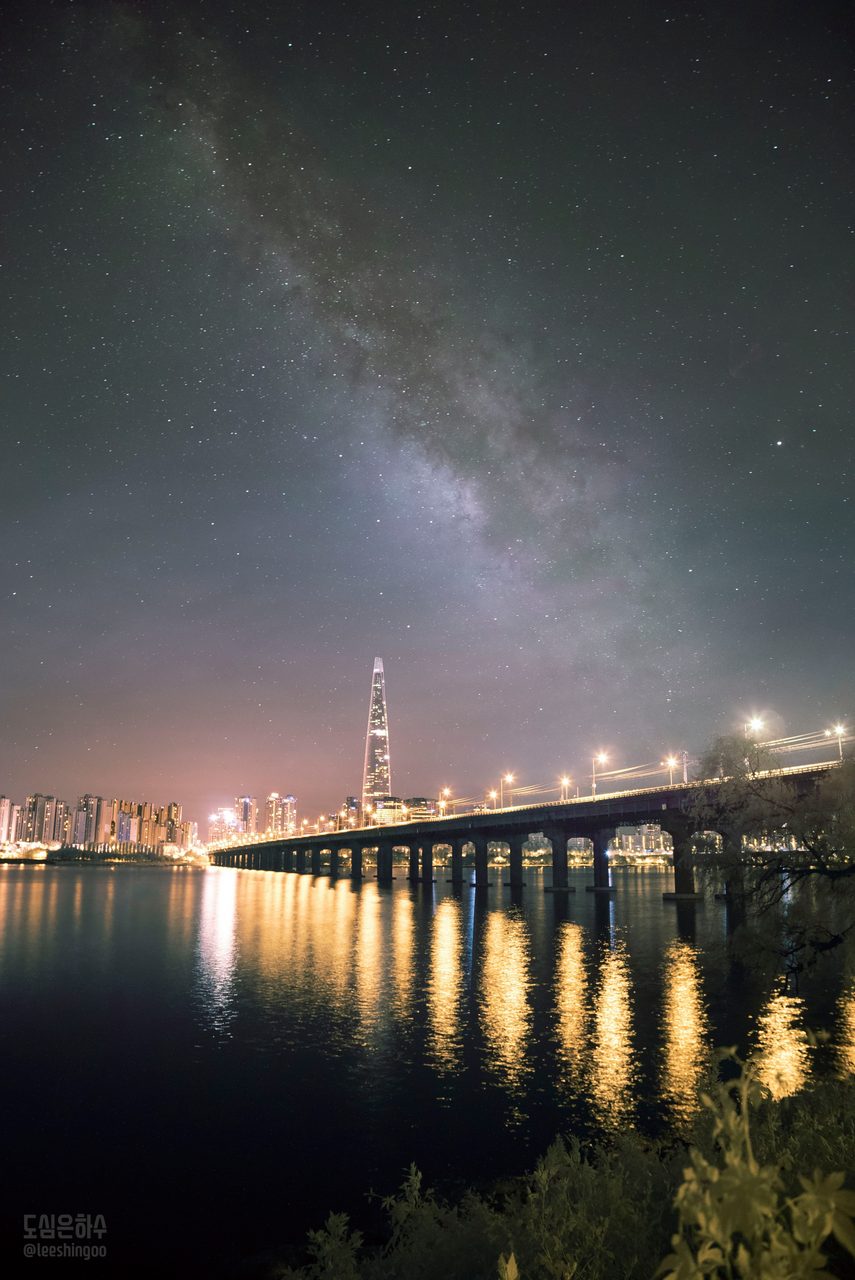
A Perseid meteor illuminates the night sky over La Palma, captured alongside the Milky Way and reflected in the LST-1 telescope's mirror.
| Active satellites | 15,749 |
| Catalogued objects | 31,342 |
| Starlink active | 9,941 |
On the night of August 15, a Perseid meteor lit up the skies over the Observatorio del Roque de los Muchachos in La Palma, Canary Islands. This striking celestial event was captured alongside the Milky Way's central band, its dark interstellar dust clouds contrasting with the luminous starlight. The scene is further enhanced by the large mirror of the prototype Large-Sized Telescope (LST-1), part of the Cherenkov Telescope Array Observatory. LST-1's 23-metre diameter mirror, composed of 198 hexagonal segments, is designed to detect brief visible light flashes caused by cosmic gamma-rays. These fleeting flashes, lasting mere billionths of a second, originate from energetic cosmic sources such as distant galaxies and gamma-ray bursts.
The Broader Cosmic Context
The Perseid meteor shower, an annual celestial event, occurs as Earth passes through debris left by Comet Swift-Tuttle. Each meteor is a fragment burning up in Earth's atmosphere, creating a spectacular light show. This particular meteor's reflection in LST-1's mirror highlights the intersection of natural phenomena and human ingenuity. The Cherenkov Telescope Array, with its cutting-edge design, aims to deepen our understanding of high-energy cosmic events. Meanwhile, the Milky Way, our galaxy, continues to be a focal point for astronomical research, with its billions of stars and complex structure offering endless mysteries. For those interested in observing such events, the Orbital Radar Pass Predictor can help plan optimal viewing times.
Frequently Asked Questions
What is the Perseid meteor shower?
What is the LST-1 telescope used for?
📎 Cite this article · data available
Orbital Radar Newsroom. (2026). Celestial Reflections: Perseid Meteor and Milky Way. Orbital Radar. https://orbitalradar.com/blog/cosmic-gallery-2026-09-27"Celestial Reflections: Perseid Meteor and Milky Way." Orbital Radar, 27 September 2026, https://orbitalradar.com/blog/cosmic-gallery-2026-09-27.@misc{orbitalradar_cosmic_gallery_2026_09_27,
title = {Celestial Reflections: Perseid Meteor and Milky Way},
author = {{Orbital Radar}},
year = {2026},
howpublished = {\url{https://orbitalradar.com/blog/cosmic-gallery-2026-09-27}}
}