SpaceX Starship's Epic Flight 13 and Chang'e-6 Lunar Discoveries

SpaceX's Starship completes Flight 13, while Chang'e-6 samples offer insights into the Moon's far side.
SpaceX Starship's Flight 13 Success
SpaceX's Starship has successfully completed its thirteenth test flight, marking a significant milestone for the company's ambitious plans to revolutionise space travel. The test, which saw the megarocket reach space, is part of SpaceX's ongoing efforts to develop a fully reusable spacecraft capable of carrying humans to Mars and beyond. Video highlights of the launch showcase the rocket's impressive ascent and controlled descent, underscoring the technical prowess of SpaceX's engineering team. For further details on upcoming SpaceX missions, the Launch Schedule provides a comprehensive overview.
Chang'e-6 Unveils Moon's Far Side Secrets
China's Chang'e-6 mission has returned with samples from the Moon's far side, offering a rare glimpse into the ancient history of our celestial neighbour. These samples, collected from a region previously unexplored, contain clues about the Moon's geological past and its formation. The findings, as reported by Universe Today, suggest that the far side may hold answers to longstanding questions about lunar evolution. Researchers are particularly interested in the isotopic compositions and mineralogy of these samples, which could shed light on the early solar system.
What to Watch: Upcoming Launches
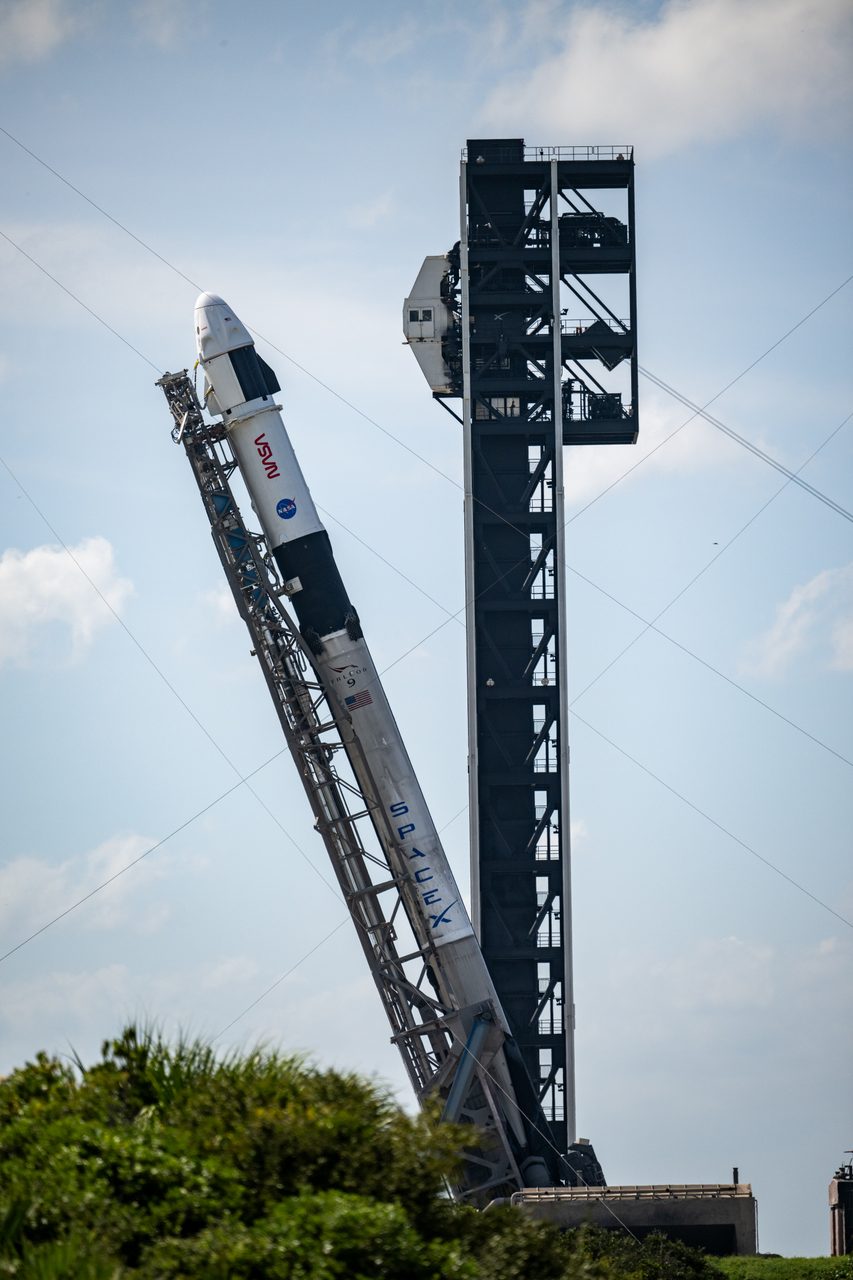
This week, both Falcon 9 and Chang Zheng rockets are scheduled to launch, as reported by NASASpaceflight. These launches are part of a busy schedule for the global space industry, with the Falcon 9 set to deploy a new batch of Starlink satellites. Meanwhile, Rocket Lab has secured a $266 million deal with the US Space Force to launch missile-defence missions from Alaska. For a detailed list of upcoming launches, the Launch Schedule is an invaluable resource.
Close Approaches and Orbital Safety
Several close approaches between satellites have been recorded, including a near encounter between Tianhui 2-02A and 2-02B at a minimum distance of 0.85 km. These events highlight the increasing congestion in low Earth orbit and the importance of tracking potential collisions. The Debris Map provides real-time data on space debris and active satellites, helping to mitigate risks associated with these close approaches.
Frequently Asked Questions
What is SpaceX's Starship?
What did Chang'e-6 discover on the Moon?
📎 Cite this article
Orbital Radar Newsroom. (2026). SpaceX Starship's Epic Flight 13 and Chang'e-6 Lunar Discoveries. Orbital Radar. https://orbitalradar.com/blog/orbital-briefing-2026-05-12"SpaceX Starship's Epic Flight 13 and Chang'e-6 Lunar Discoveries." Orbital Radar, 12 May 2026, https://orbitalradar.com/blog/orbital-briefing-2026-05-12.@misc{orbitalradar_orbital_briefing_2026_05_12,
title = {SpaceX Starship's Epic Flight 13 and Chang'e-6 Lunar Discoveries},
author = {{Orbital Radar}},
year = {2026},
howpublished = {\url{https://orbitalradar.com/blog/orbital-briefing-2026-05-12}}
}