Total Solar Eclipse Captivates Greenland, Reveals Cosmic Dance
A total solar eclipse visible from Greenland today showcases the intricate dance of celestial bodies, while close satellite approaches highlight ongoing orbital congestion.
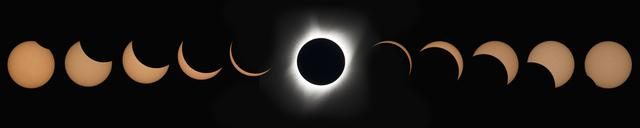
Today, a total solar eclipse was visible from Greenland, providing a rare opportunity to observe the alignment of the Sun, Moon, and Earth. This celestial event, captured in stunning detail by NASA's 'A Sunflower’s View of Totality', highlights the precise mechanics that govern our solar system. Such eclipses occur when the Moon passes directly between the Earth and the Sun, casting a shadow on Earth and temporarily blocking the Sun's light.
Satellite Close Approaches Raise Concerns
In recent days, multiple close approaches between satellites have been observed, underscoring the growing congestion in Earth's orbit. Notably, IRIDE-MS2-HEO-14 and ICEYE-X78 came within approximately 1.00 km of each other. Such events are tracked meticulously to prevent potential collisions, which could generate additional space debris. The Debris Map on Orbital Radar provides a detailed view of these and other tracked objects.
What to Watch
While no launches are scheduled for today, the space community remains vigilant for any updates on upcoming missions. The Launch Schedule on Orbital Radar is regularly updated to provide the latest information on future launches. Additionally, with 14 re-entries predicted soon, the Re-entry Tracker offers insights into objects returning to Earth's atmosphere.
Frequently Asked Questions
What causes a total solar eclipse?
How are satellite close approaches monitored?
📎 Cite this article
Orbital Radar Newsroom. (2026). Total Solar Eclipse Captivates Greenland, Reveals Cosmic Dance. Orbital Radar. https://orbitalradar.com/blog/orbital-briefing-2026-08-14"Total Solar Eclipse Captivates Greenland, Reveals Cosmic Dance." Orbital Radar, 14 August 2026, https://orbitalradar.com/blog/orbital-briefing-2026-08-14.@misc{orbitalradar_orbital_briefing_2026_08_14,
title = {Total Solar Eclipse Captivates Greenland, Reveals Cosmic Dance},
author = {{Orbital Radar}},
year = {2026},
howpublished = {\url{https://orbitalradar.com/blog/orbital-briefing-2026-08-14}}
}