The True Face of Andromeda: Unveiling Galactic Neighbours
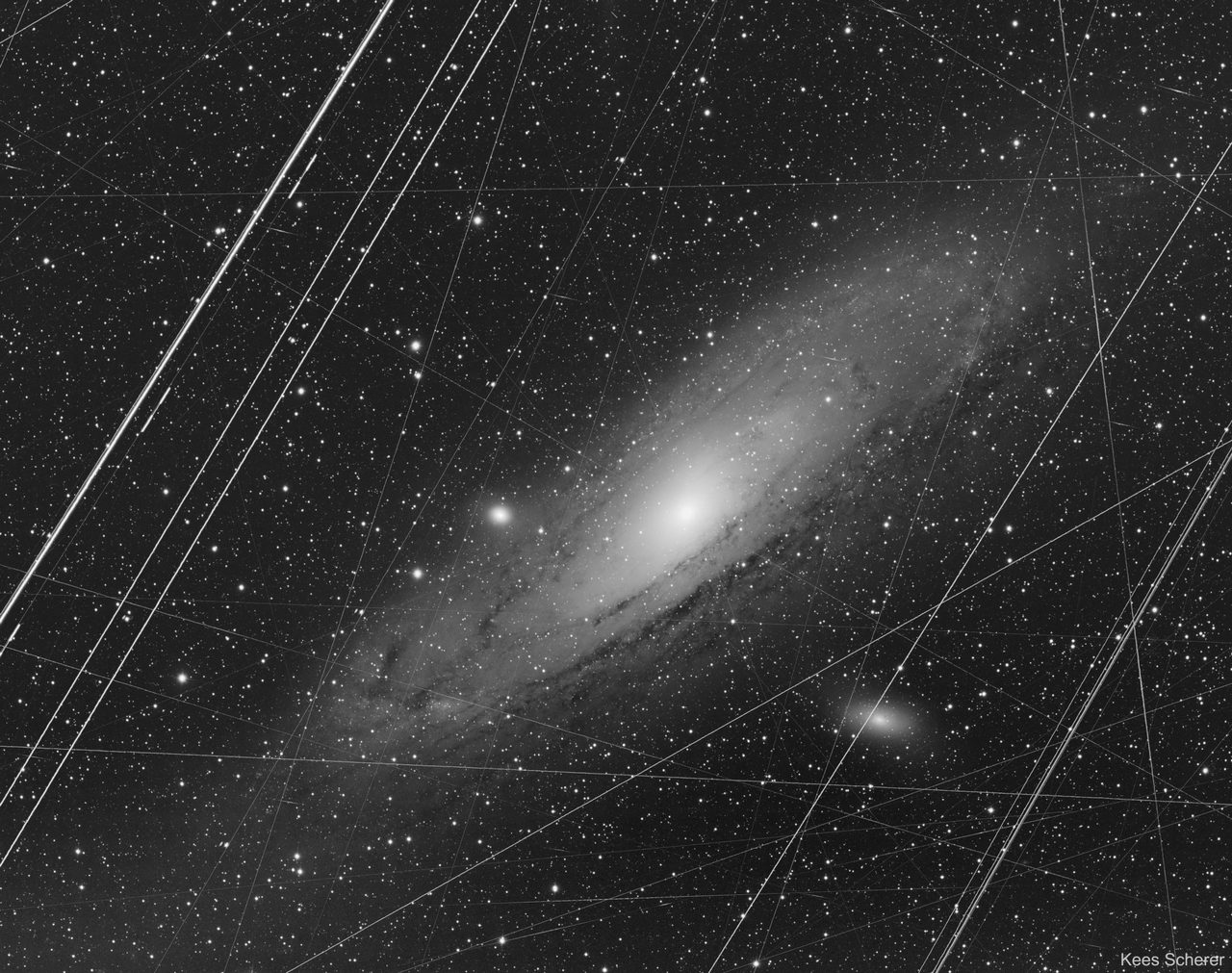
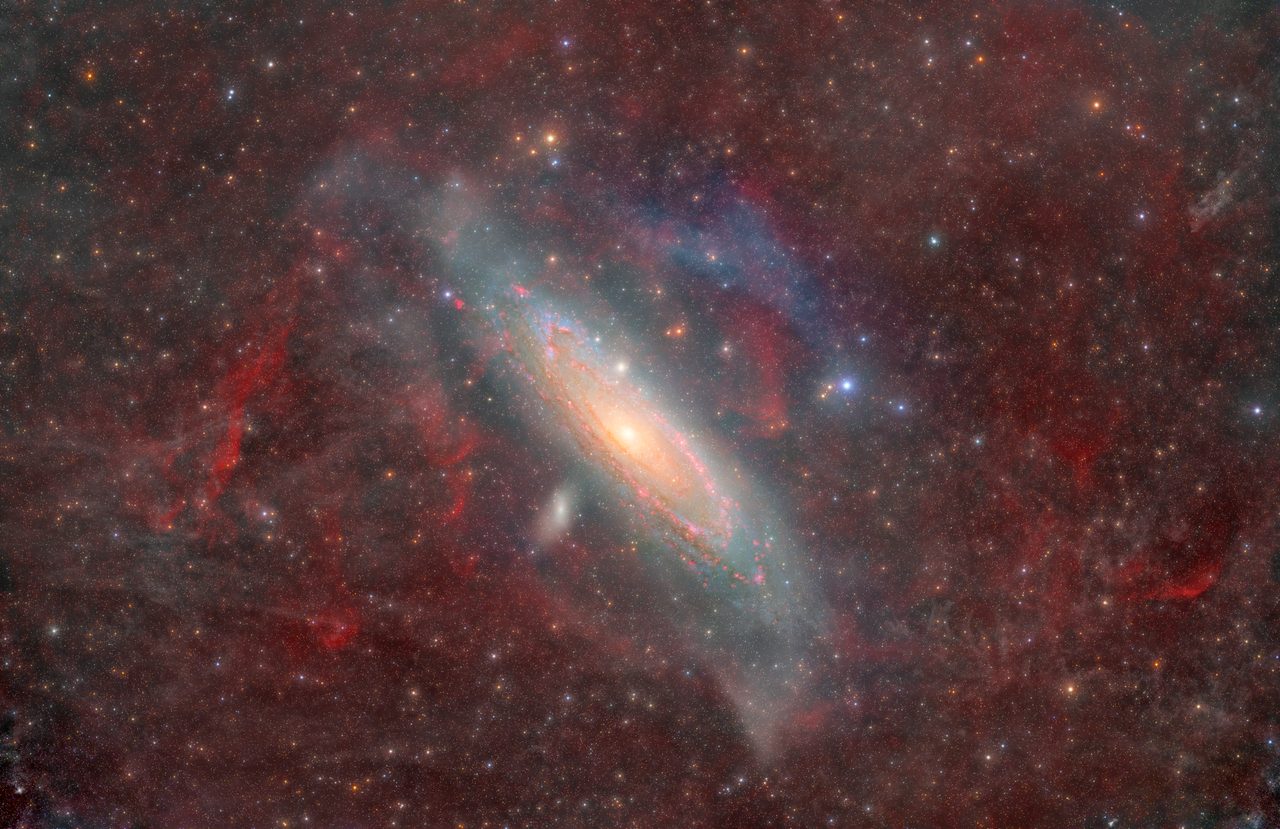
Discover the Andromeda galaxy's authentic appearance, captured in a 2019 long exposure image, showcasing its natural beauty and imperfections.
| Active satellites | 15,745 |
| Catalogued objects | 31,298 |
| Starlink active | 9,962 |
The Andromeda galaxy, also known as M31, is our closest major galactic neighbour, located approximately 2.5 million light-years away. The featured image captures Andromeda's true appearance, free from the enhancements often applied in post-processing. This image, a composite of 223 five-minute exposures, was taken from a garden observatory in Portugal in 2019. The long exposure reveals not only the galaxy's spiral structure but also the imperfections introduced by Earth's atmosphere and digital imaging, such as airplane trails and cosmic ray streaks.
Astrophotography often requires meticulous post-processing to remove artefacts that can obscure the subject of interest. In this case, software like Astro Pixel Processor and PixInsight was employed to minimise these Earthly distractions, offering a clearer view of Andromeda's natural splendour. This approach highlights the challenges astronomers face when capturing distant celestial objects and underscores the importance of advanced image processing techniques in modern astronomy.
Connecting the Dots: Andromeda and Our Place in the Universe
The Andromeda galaxy is not just a beautiful sight; it is also a significant object of study for astronomers. As the largest galaxy in our local group, Andromeda provides valuable insights into galactic formation and evolution. Its proximity allows for detailed observation and comparison with our own Milky Way, enhancing our understanding of galactic dynamics.
The image also serves as a reminder of the many satellites orbiting Earth, which can sometimes interfere with astronomical observations. Currently, 15,745 active satellites are tracked by Orbital Radar's live catalogue, highlighting the growing challenge of maintaining clear skies for astronomical research. As our technological footprint in space expands, balancing satellite deployment with the needs of scientific observation becomes increasingly crucial.
Viewing Tips: Observing Andromeda from Your Backyard
For amateur astronomers wishing to observe Andromeda, autumn is an ideal time in the Northern Hemisphere. The galaxy is visible to the naked eye in dark-sky conditions, appearing as a faint smudge in the constellation Andromeda. Using binoculars or a small telescope can enhance the view, revealing more of its spiral structure.
To plan your observation, consider using the Orbital Radar pass predictor to avoid times when satellite trails might affect your view. This tool can help you find the best windows for uninterrupted stargazing and maximise your chances of a clear sighting of this majestic galaxy.
Frequently Asked Questions
What is the distance between the Milky Way and Andromeda?
Can the Andromeda galaxy be seen with the naked eye?
📎 Cite this article · data available
Orbital Radar Newsroom. (2026). The True Face of Andromeda: Unveiling Galactic Neighbours. Orbital Radar. https://orbitalradar.com/blog/cosmic-gallery-2026-09-28"The True Face of Andromeda: Unveiling Galactic Neighbours." Orbital Radar, 28 September 2026, https://orbitalradar.com/blog/cosmic-gallery-2026-09-28.@misc{orbitalradar_cosmic_gallery_2026_09_28,
title = {The True Face of Andromeda: Unveiling Galactic Neighbours},
author = {{Orbital Radar}},
year = {2026},
howpublished = {\url{https://orbitalradar.com/blog/cosmic-gallery-2026-09-28}}
}