Rocket Lab's GHOST System Unveiled Amidst Chinese Launch Failure
Rocket Lab introduces the GHOST portable spaceport system, while China's LM-7A rocket fails. Key satellite close approaches noted.
Rocket Lab has announced its new 'GHOST' portable spaceport system, designed to enable launches from virtually any location. This development comes as the company faces delays in the debut of its Neutron rocket, with the launch window narrowing due to ongoing development challenges. The GHOST system aims to provide flexibility and reduce the dependency on traditional launch sites, potentially transforming how and where launches occur.
Chinese Launch Setback
In contrast, China's Long March 7A (LM-7A) rocket has encountered a failure, marking a significant setback for the Chinese space programme. The specifics of the failure are yet to be disclosed, but it underscores the inherent challenges of rocket launches. The LM-7A is part of China's efforts to expand its capabilities in launching heavier payloads to higher orbits. Further details may emerge as investigations proceed, with updates expected from the Chinese space agency.
Orbital Close Approaches
Several close approaches between satellites have been recorded, highlighting the growing congestion in low Earth orbit (LEO). Notably, IRIDE FM7 and FLOCK 4H-8 came within approximately 0.74 km of each other. Such events underscore the importance of tracking and managing space traffic to prevent potential collisions. For a detailed view of ongoing close approaches, visit the Orbital Radar Debris Map.
What to Watch
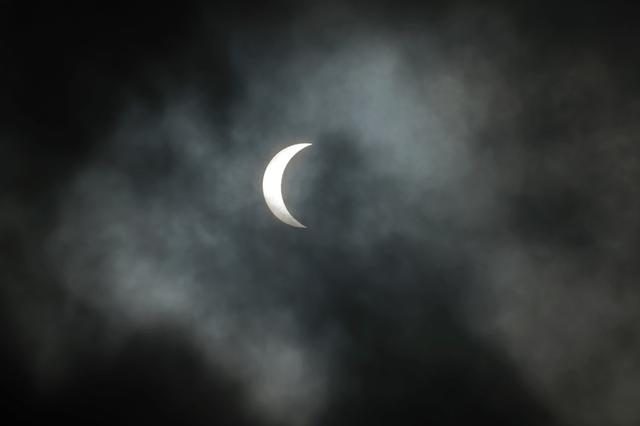
While no launches are scheduled for today, a total solar eclipse is set to occur on 12 August. This celestial event will be visible online through various livestreams, providing an opportunity for global audiences to witness the eclipse. Additionally, the ongoing development of Rocket Lab's Neutron rocket remains a point of interest, as the company navigates technical challenges to meet its launch schedule.
Frequently Asked Questions
What is Rocket Lab's GHOST system?
What happened to China's Long March 7A rocket?
📎 Cite this article
Orbital Radar Newsroom. (2026). Rocket Lab's GHOST System Unveiled Amidst Chinese Launch Failure. Orbital Radar. https://orbitalradar.com/blog/orbital-briefing-2026-08-11"Rocket Lab's GHOST System Unveiled Amidst Chinese Launch Failure." Orbital Radar, 11 August 2026, https://orbitalradar.com/blog/orbital-briefing-2026-08-11.@misc{orbitalradar_orbital_briefing_2026_08_11,
title = {Rocket Lab's GHOST System Unveiled Amidst Chinese Launch Failure},
author = {{Orbital Radar}},
year = {2026},
howpublished = {\url{https://orbitalradar.com/blog/orbital-briefing-2026-08-11}}
}